
 EN
EN



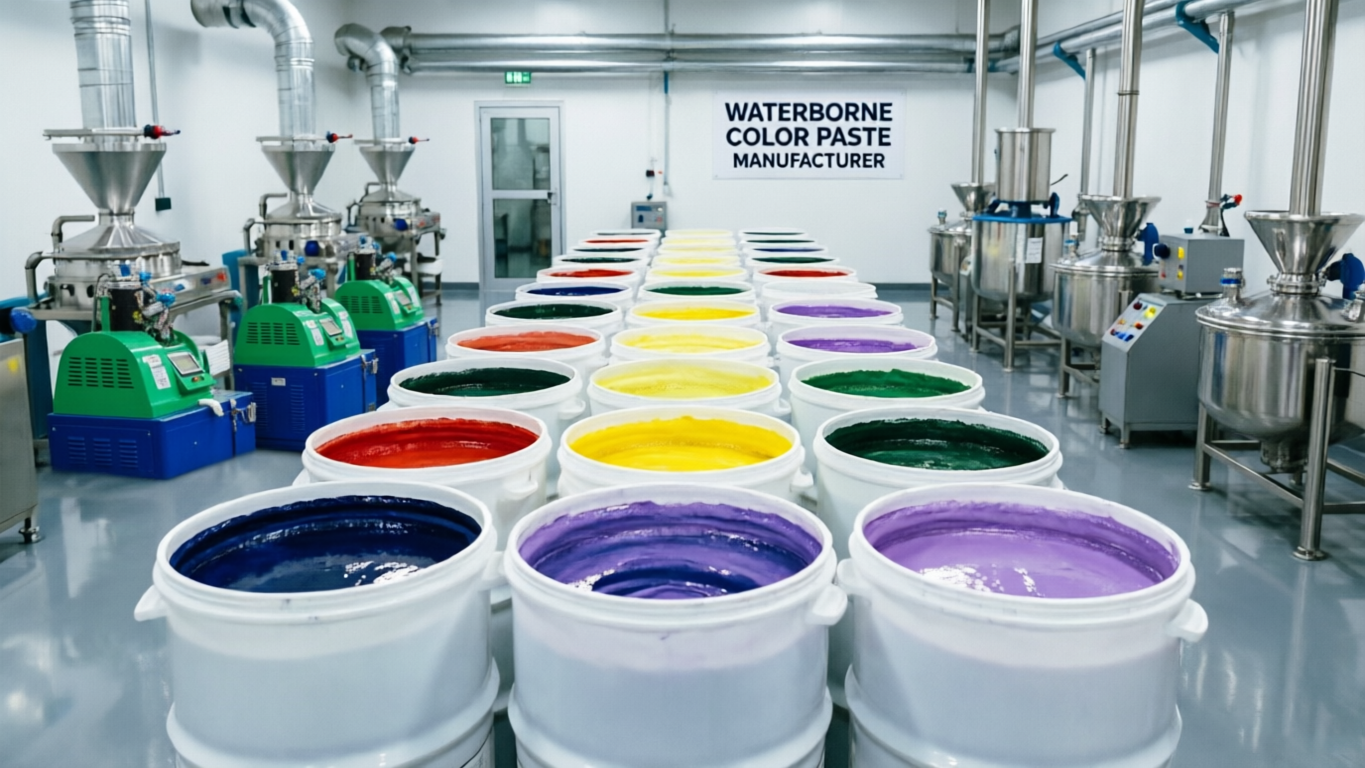
When it comes to achieving consistent, vibrant coloration in extruded plastic products, the choice of colorant form matters enormously. Manufacturers working with polyethylene, polypropylene, PVC, and other thermoplastics have long debated whether solid masterbatches or liquid color concentrate delivers superior results. The question of dispersion quality is particularly central to this debate, since poor color distribution leads to visual defects, structural inconsistencies, and costly production waste.
The short answer is yes — liquid color concentrate can significantly improve dispersion in extrusion processes, but understanding why requires a closer look at the physics of mixing, the mechanics of screw geometry, and the unique flow properties that liquid colorants bring to the processing line. This article explores the conditions under which liquid color concentrate outperforms alternative colorant formats and what extrusion professionals should consider when evaluating a switch.
Understanding Dispersion Challenges in Extrusion
Why Dispersion Matters in Extruded Products
Dispersion in extrusion refers to the uniform distribution of colorant pigment particles throughout the polymer melt. When dispersion is inadequate, the finished product exhibits streaking, color variation between production runs, surface mottling, or localized pigment agglomerates that can weaken the material structurally. For applications such as film extrusion, pipe manufacturing, or profile extrusion, these defects are not merely cosmetic — they can compromise product integrity and lead to customer rejections.
The challenge is compounded by the fact that many pigments, particularly organic pigments and carbon black, have a natural tendency to agglomerate. Breaking down these agglomerates requires sufficient shear energy within the extruder barrel, combined with a colorant vehicle that facilitates wetting of the pigment surface. This is one of the core areas where liquid color concentrate demonstrates a measurable advantage.
Processors also face dispersion issues related to residence time, screw speed, barrel temperature profiles, and the compatibility between the colorant carrier and the base resin. A colorant system that does not integrate smoothly with the polymer matrix will always produce variable results regardless of how carefully other parameters are controlled.
The Limitations of Solid Masterbatch Dispersion
Solid masterbatch has been the dominant colorant format in extrusion for decades, and for good reason — it is easy to handle, has a long shelf life, and requires no specialized injection equipment. However, solid masterbatch introduces its own dispersion challenges. Because the pigment is pre-dispersed in a carrier resin, the masterbatch must first melt, then the carrier resin must mix with the base resin, and finally the pigment must redistribute into the melt. This is a multi-stage dispersion process that depends heavily on melt compatibility and screw design.
If the carrier resin of the masterbatch has a significantly different viscosity or melting point compared to the base resin, incomplete mixing can occur. This is a common source of dispersion defects in production environments where the masterbatch supplier and the base resin supplier are not closely coordinated. Liquid color concentrate eliminates this intermediate carrier resin stage entirely, allowing pigments to enter the melt directly in a pre-wetted, flowable state.
How Liquid Color Concentrate Improves Dispersion
Direct Pigment Contact with the Polymer Melt
The most significant dispersion advantage of liquid color concentrate lies in how it is introduced to the extrusion process. Unlike solid masterbatch, which is blended with pellets before entering the hopper, liquid color concentrate is typically injected directly into the extruder barrel — often at the throat or at a downstream injection port. This means the colorant enters the melt zone as a liquid with pre-wetted pigment particles already suspended in a compatible carrier fluid.
Because the pigment in liquid color concentrate is already in intimate contact with its carrier medium, the energy required to achieve full dispersion is substantially lower. The extruder screw does not need to first break down a solid masterbatch particle and then redistribute the released pigment — the work of initial pigment wetting has already been done during the manufacture of the liquid color concentrate itself. This translates to more consistent dispersion, particularly in shorter-barrel extruders or at higher throughput speeds where residence time is limited.
Processors running high-speed film lines or thin-wall tubing extrusion benefit most from this characteristic, as the reduced dispersion burden allows them to maintain output rates without sacrificing color consistency. The direct-injection method also reduces the risk of pigment segregation that can occur when solid masterbatch and pellets are blended in a hopper and then subject to vibration or uneven feeding.
Improved Compatibility and Pigment Wetting
Liquid color concentrate is formulated with carrier fluids — often polyol-based, mineral oil-based, or resin-specific vehicles — that are selected to be highly compatible with the target polymer. This compatibility ensures that when the liquid color concentrate enters the extruder, the carrier fluid and the polymer melt become miscible rapidly, spreading the pigment particles evenly throughout the melt stream without requiring extended mixing length.
Pigment wetting is a critical factor in dispersion quality. A pigment particle that is poorly wetted by its surrounding medium will tend to remain agglomerated, creating visible defects in the final product. The fluid nature of liquid color concentrate means that pigment surfaces are thoroughly wetted by the carrier before they ever reach the extruder, giving the screw a significant head start on the dispersion process. This pre-wetting effect is something that solid masterbatch simply cannot replicate in the same way.
For processors working with difficult-to-disperse pigments such as phthalocyanine blue, quinacridone red, or carbon black, this pre-wetting advantage can be the difference between acceptable and unacceptable product quality. The liquid color concentrate approach effectively reduces the dispersion work that must be done inside the extruder barrel.
Practical Considerations for Implementing Liquid Color Concentrate
Equipment and Injection System Requirements
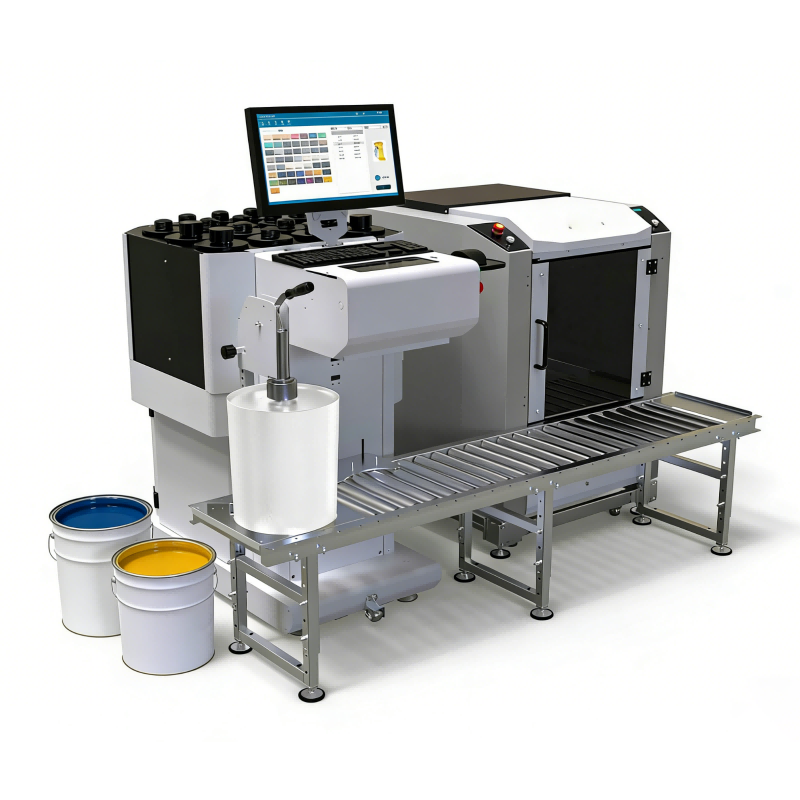
Transitioning to liquid color concentrate from solid masterbatch requires investment in a metering and injection system. Peristaltic pumps, gear pumps, or piston-based dosing systems are commonly used to deliver liquid color concentrate at precise, consistent flow rates synchronized with extruder output. The injection port must be positioned to allow thorough mixing of the liquid colorant with the polymer melt before it reaches the die.
Modern liquid color concentrate injection systems are highly accurate, capable of dosing at ratios as low as 0.5% to 3% by weight, which is typically much lower than the let-down ratios used for solid masterbatch. This low addition rate means that the colorant contributes minimal foreign material to the melt, further reducing the risk of compatibility-related dispersion issues. Processors should work closely with their liquid color concentrate supplier to validate pump calibration and ensure that the dosing system maintains consistent delivery even during startup, shutdown, and production speed changes.
Maintenance of the injection system is also a practical consideration. Liquid color concentrate can settle or separate if stored improperly, and pump components must be kept clean to prevent colorant residue from hardening in the system. Most suppliers provide detailed storage and handling guidelines to address these concerns.
Process Parameter Optimization
Switching to liquid color concentrate typically requires revisiting barrel temperature profiles and screw speed settings. Because the liquid colorant introduces a small but meaningful amount of carrier fluid into the melt, the overall melt viscosity may shift slightly, and temperature adjustments may be needed to compensate. Processors who have optimized their extrusion parameters for solid masterbatch should not assume that those same settings will produce optimal results with liquid color concentrate without conducting trial runs.
Color strength and pigment loading in liquid color concentrate can be formulated to match the specific requirements of the extrusion line. Higher pigment loadings allow for lower dosing rates, which minimizes the impact on melt rheology. Working with a technically capable supplier who understands the interaction between liquid color concentrate formulation and extrusion process parameters is essential for achieving the best dispersion outcomes.
It is also worth noting that liquid color concentrate often enables faster color changes compared to solid masterbatch, since the injection system can be purged and switched to a new color without requiring a lengthy purge of the extruder barrel. This operational benefit, combined with improved dispersion, makes liquid color concentrate an attractive option for extrusion lines that run multiple colors or require frequent product changeovers.
Industries and Applications Where Liquid Color Concentrate Excels
Film and Sheet Extrusion
Film extrusion is one of the most demanding applications for colorant dispersion. In blown film and cast film processes, even minor pigment agglomerates can create gels, fisheyes, or streaks that are immediately visible in the finished film. The thin gauge of most film products amplifies any dispersion deficiency, making colorant uniformity a non-negotiable requirement.
Liquid color concentrate is widely used in film extrusion precisely because of its superior dispersion characteristics. The direct injection method and pre-wetted pigment state allow film producers to achieve clean, streak-free color across very thin gauges without sacrificing line speed. For agricultural films, packaging films, and industrial stretch films, liquid color concentrate provides the consistency required to meet tight color specifications and maintain film mechanical properties.
Pipe, Profile, and Compound Extrusion
In pipe and profile extrusion, color uniformity is important both for aesthetic reasons and for quality control purposes. Color-coded pipes, for example, must meet regulatory or industry standards for color accuracy. Liquid color concentrate provides the dispersion consistency needed to produce color-coded products that maintain their designated color throughout the wall thickness of the pipe, not just on the surface.
Compound extrusion, where multiple materials are blended and extruded to create engineered compounds, also benefits from liquid color concentrate. In these applications, the complexity of the polymer blend can make solid masterbatch dispersion more difficult due to competing viscosity and compatibility factors. Liquid color concentrate simplifies the colorant integration step, reducing one variable in an already complex compounding process.
The versatility of liquid color concentrate across multiple extrusion application types demonstrates that it is not a niche solution but rather a broadly applicable colorant format capable of delivering performance improvements in a wide range of industrial contexts.
FAQ
Is liquid color concentrate suitable for all types of extruders?
Liquid color concentrate is compatible with most single-screw and twin-screw extruders, provided the appropriate injection system is installed. The injection port location and pump specification must be matched to the extruder design and throughput requirements. Consulting with the liquid color concentrate supplier is recommended to determine the optimal injection setup for a specific extruder configuration.
Does liquid color concentrate affect the mechanical properties of extruded products?
When used at recommended dosing rates, liquid color concentrate has minimal impact on the mechanical properties of extruded products. The carrier fluid is selected to be compatible with the base resin, and the low addition rates — typically below 3% — mean the colorant contributes very little foreign material to the melt. Comprehensive trials should be conducted when introducing liquid color concentrate to a new application to confirm that target mechanical performance is maintained.
How does liquid color concentrate compare to solid masterbatch in terms of color change speed?
Liquid color concentrate generally enables faster color changes than solid masterbatch. The injection system can be purged quickly between colors, and the low dosing rates mean the extruder barrel transitions to the new color rapidly. This is a significant operational advantage for extrusion lines that run frequent color changes or short production runs of multiple SKUs.
What storage conditions are required for liquid color concentrate?
Liquid color concentrate should be stored in sealed containers away from direct sunlight and extreme temperatures. Most formulations should be kept within a moderate temperature range — typically between 10°C and 35°C — to prevent separation or viscosity changes. Containers should be stirred or agitated before use if the product has been stored for an extended period. Always follow the specific storage guidelines provided by the liquid color concentrate supplier.
Table of Contents
- Understanding Dispersion Challenges in Extrusion
- How Liquid Color Concentrate Improves Dispersion
- Practical Considerations for Implementing Liquid Color Concentrate
- Industries and Applications Where Liquid Color Concentrate Excels
-
FAQ
- Is liquid color concentrate suitable for all types of extruders?
- Does liquid color concentrate affect the mechanical properties of extruded products?
- How does liquid color concentrate compare to solid masterbatch in terms of color change speed?
- What storage conditions are required for liquid color concentrate?