
 EN
EN



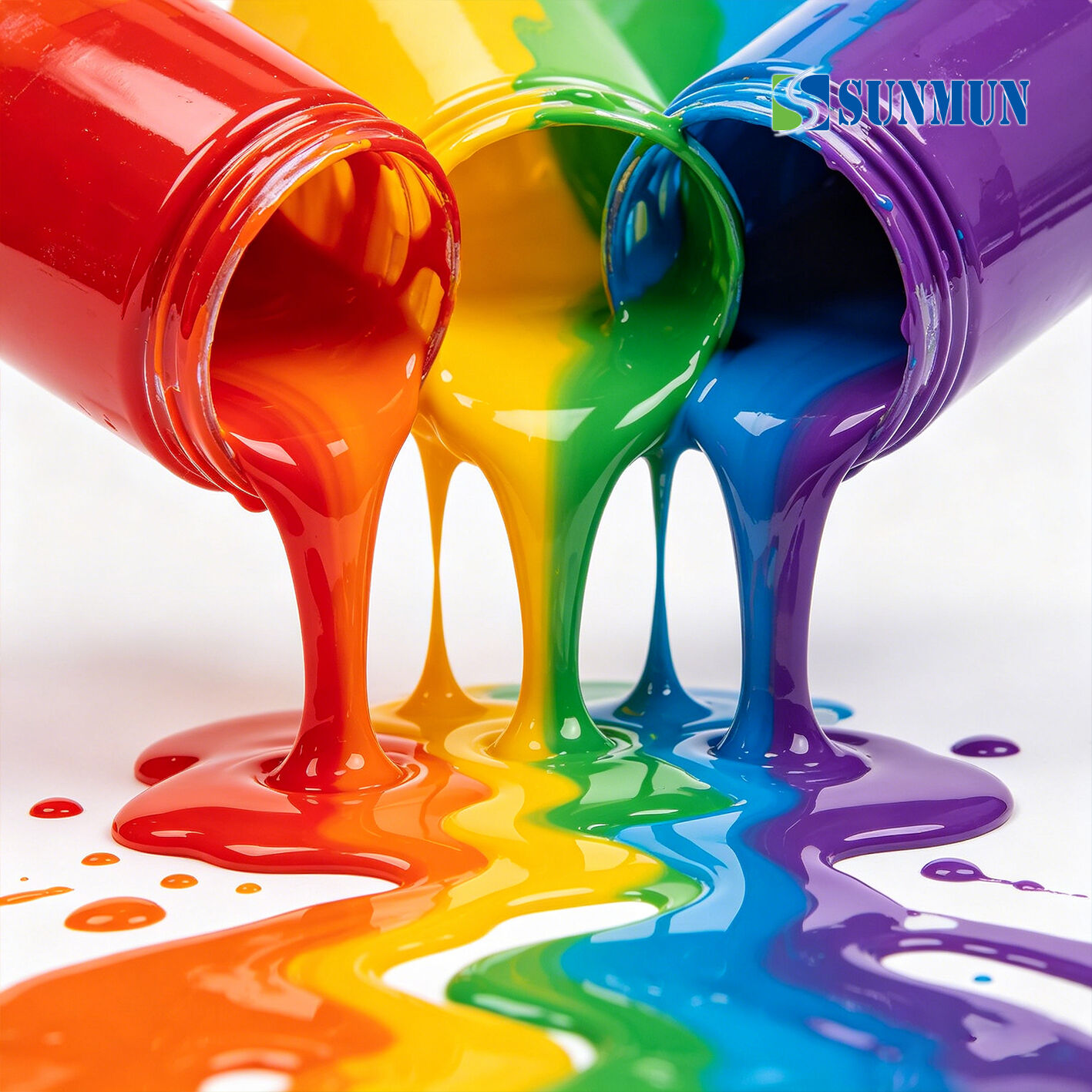
In modern furniture manufacturing, achieving consistent, vibrant, and durable color on wood surfaces is not left to chance. The use of pigment paste in wood coatings has become a foundational practice across production lines of all scales, from boutique cabinet shops to large-scale industrial facilities. Understanding how pigment paste is applied, and why the method matters so much, is essential for anyone responsible for quality, efficiency, or formulation decisions in a furniture coating operation.

The application of pigment paste in wood coatings is not simply a matter of mixing color into a base coat. It involves a series of carefully controlled steps, from selecting the right paste formulation to integrating it with binders and applying it through automated or manual systems on the production line. Each decision along this workflow affects the final appearance, adhesion, and longevity of the furniture finish. This article walks through that entire process in practical, production-relevant detail.
Understanding Pigment Paste in the Context of Wood Coatings
What Pigment Paste Actually Is
Pigment paste is a concentrated dispersion of pigment particles in a liquid medium, typically water or a solvent, combined with dispersing agents, wetting agents, and sometimes binders. Unlike dry pigments, pigment paste offers superior ease of incorporation into coating systems, reducing the risk of agglomeration and ensuring uniform color distribution throughout the coating formulation. In furniture production lines, this uniformity is not optional — it is a quality requirement.
The liquid form of pigment paste allows it to blend smoothly into water-based lacquers, polyurethane coatings, UV-curable systems, and other wood coating bases. Because wood is a naturally variable substrate with grain patterns, porosity differences, and surface irregularities, the coating system must deliver color consistently regardless of those variations. A well-formulated pigment paste achieves this by ensuring that pigment particles are finely milled and stably suspended, ready to integrate with the coating vehicle without separation or streaking.
It is also important to distinguish between universal pigment paste and system-specific formulations. Universal pastes are designed to be compatible with a wide range of coating systems, while system-specific pastes are optimized for a particular binder chemistry. For furniture production lines running multiple coating systems, the choice between these two types can have significant implications for color consistency, batch-to-batch reproducibility, and the overall efficiency of the tinting process.
Why Pigment Paste Is Preferred Over Dry Pigment in Production Lines
In an industrial furniture production environment, handling dry pigment powders presents challenges related to dust, measurement precision, dispersion quality, and worker safety. Pigment paste, by contrast, is pre-dispersed, pre-wetted, and ready to be incorporated directly into the coating mix. This reduces preparation time and minimizes the risk of undispersed pigment clusters appearing as color defects on finished panels or cabinet doors.
From a process-control perspective, pigment paste offers measurable, repeatable dosing. Automated tinting machines and dispensing systems used on modern furniture production lines are calibrated to work with liquid colorants, not powders. This makes pigment paste the natural format for any operation seeking to standardize color across large production runs. The ability to store pigment paste in sealed containers with long shelf life also reduces waste and simplifies inventory management on the shop floor.
Furthermore, pigment paste contributes to better surface quality in the final coating. Because the pigment is already finely milled during paste manufacturing, the coating film produced tends to have a smoother texture, more even gloss, and fewer micro-defects compared to coatings where pigment was introduced in a less controlled form. For high-end furniture, where surface aesthetics are a primary selling point, this advantage is commercially significant.
The Workflow of Applying Pigment Paste in Furniture Coating Lines
Formulation and Mixing at the Tinting Stage
The application of pigment paste in wood coatings begins at the formulation stage, where color specialists or production chemists calculate the correct ratio of paste to base coating. This ratio is determined by the desired color depth, the opacity or transparency requirements of the finish, and the specific properties of the base coat being used. Standard tinting software or color-matching tools are typically employed to define the paste blend needed to hit a target color specification.
Once the formulation is established, the pigment paste is added to the base coating — usually a clear or white base — under controlled mixing conditions. The order of addition matters: the paste should be introduced into the base coat while stirring is underway, to prevent localized concentration that could cause streaks or tinting inconsistencies. High-shear mixing is sometimes used at this stage to ensure full integration, although care must be taken not to introduce excessive air into water-based systems.
In large-scale furniture production lines, this tinting process may be handled by automated color dispensing machines that meter precise quantities of multiple pigment paste types into a base, following a digital color recipe. These systems dramatically reduce human error, improve batch-to-batch consistency, and allow rapid color changeovers when switching between furniture collections or custom orders.
Coating Application Methods Compatible with Pigment Paste
Once the pigment paste has been incorporated into the coating formulation, that tinted coating is applied to the wood substrate using one of several standard industrial methods. Roller coating is among the most common approaches in flat-panel furniture production. The tinted coating is transferred from a roller to the wood surface in a highly controlled manner, allowing for consistent film thickness across large flat panels such as cabinet doors, tabletops, and drawer fronts.
Spray application — including airless spray, air-assisted airless, and electrostatic spray — is widely used for shaped or profiled furniture components. The tinted coating containing pigment paste must be formulated with appropriate viscosity for the spray system being used. If the paste has affected the rheology of the base coat significantly, adjustments to the thinner content or application pressure may be necessary to maintain a consistent wet film and avoid defects such as orange peel or sagging.
Flow coating and curtain coating are additional methods used for high-volume production of flat substrates. In these processes, the tinted wood coating is either flowed over the substrate or applied as a continuous falling curtain. The stability of the pigment paste dispersion is critical in these systems, as any sedimentation or separation during the application cycle would result in color variation across the production run. Quality pigment paste formulations maintain their dispersion stability even under the shear and flow conditions of continuous coating lines.
Critical Parameters That Affect Pigment Paste Performance in Wood Coatings
Compatibility Between Pigment Paste and the Coating System
One of the most important considerations when applying pigment paste in furniture wood coatings is chemical compatibility. A water-based pigment paste introduced into a solvent-based coating system may cause flocculation, where pigment particles clump together and produce an uneven, grainy finish. Similarly, a paste designed for alkyd systems may not perform reliably in a polyurethane or UV coating. Production teams must verify compatibility before integrating any new pigment paste into an existing coating line.
Testing compatibility involves small-scale rub-out tests and drawdown evaluations before the tinted coating is approved for production use. A rub-out test — where the freshly applied coating is manually rubbed in a localized area immediately after application — reveals whether the pigment paste has floated to the surface or whether there is a difference in color development between disturbed and undisturbed areas. Passing this test is a reliable indicator that the paste and base coat are genuinely compatible at the molecular level.
Formulators working with pigment paste products specifically engineered for water-based industrial applications benefit from reduced compatibility risk, as these pastes are designed with dispersant systems and pH profiles aligned to the chemistry of modern water-based coatings. This matters especially for furniture production lines transitioning from solvent-based to water-based systems in response to environmental regulations and VOC reduction targets.
Pigment Loading, Color Strength, and Film Build
The pigment loading of a pigment paste — meaning the concentration of pigment particles per unit volume — directly determines how much paste must be added to achieve a given color intensity. High-strength pastes allow formulators to achieve deep, saturated colors with smaller addition levels, which minimizes any disruption to the rheology, drying performance, or adhesion properties of the base coating. Low-strength pastes may require higher addition rates that can affect film build and open time.
In furniture production, achieving the correct color with the minimum impact on coating performance is a key formulation goal. Adding too much pigment paste to reach a target shade can reduce the binder-to-pigment ratio in the final film, weakening adhesion and potentially making the dried coating more susceptible to scratching, blocking, or humidity damage. Understanding the color strength specification of a paste is therefore not just about aesthetics — it has direct implications for durability and performance on the furniture surface.
Film build — the thickness of the dried coating layer — is another variable that interacts with pigment paste loading. For opaque finishes on MDF or particleboard furniture substrates, multiple coats are typically applied, and the pigment paste loading must be consistent across all coats to prevent color shift between primer, base coat, and topcoat layers. Production supervisors should establish clear documentation of paste addition rates per coat level to prevent drift across production batches.
Quality Control and Color Consistency on the Production Line
Measuring and Verifying Color After Pigment Paste Application
Applying pigment paste to wood coatings in a production environment requires structured quality control at multiple checkpoints. Spectrophotometry is the standard measurement tool for verifying color accuracy after application. A spectrophotometer measures the light reflectance of the coated surface across the visible spectrum and calculates color values — typically expressed in CIE L*a*b* notation — that can be compared against the target color standard. Any deviation beyond the agreed tolerance range triggers a review of the paste addition rate or mixing process.
Visual assessment under standardized light sources complements instrumental measurement, particularly for detecting metamerism — a condition where two coatings appear to match under one light source but diverge under another. Because furniture is displayed and used under a variety of lighting conditions, production teams must evaluate pigment paste application results under multiple illuminants, including daylight simulation, incandescent, and fluorescent sources.
Color consistency across a production run is also influenced by factors beyond the pigment paste itself, including substrate variability, ambient temperature and humidity in the coating facility, and the condition of spray or roller equipment. A robust quality control program addresses all of these variables systematically, rather than attributing all color variation to the paste alone. Documentation of environmental conditions alongside color readings helps identify root causes when consistency issues arise.
Managing Color Changeovers and Paste Cleaning on Production Lines
Switching from one color to another on a furniture production line involves flushing and cleaning the coating delivery system thoroughly between production runs. Residual pigment paste from a previous color can contaminate the next batch, causing visible streaks or color shift in the early panels of the new run. For water-based coating lines, cleaning is typically performed with water or mild alkaline cleaning solutions, both of which are compatible with water-based pigment paste residues.
The frequency and thoroughness of cleaning cycles is particularly important in multi-color production environments, such as kitchen cabinet lines that produce doors in dozens of different stains and paints. Automated circulation systems with programmable flushing cycles can reduce downtime and ensure consistent line readiness between color changes. The selection of a pigment paste with low staining tendency on equipment surfaces also contributes to faster, more complete cleanout, reducing material waste and color-contamination defects.
Production managers should also establish handling and storage protocols for pigment paste containers to prevent premature settling, skin formation, or contamination. Containers should be sealed between uses, stored within the recommended temperature range, and agitated before dispensing if they have been held for extended periods. These seemingly minor logistical details have a meaningful impact on the color performance delivered at the coating stage.
FAQ
What types of wood coating systems are compatible with pigment paste?
Pigment paste can be formulated for compatibility with a wide range of wood coating chemistries, including water-based acrylic, polyurethane, alkyd, UV-curable, and nitrocellulose lacquer systems. However, not all pigment paste products are universal — compatibility must be verified through compatibility testing before production use. Water-based pigment paste is specifically suited for water-borne coating systems, which are increasingly prevalent in modern furniture production lines due to lower VOC profiles and regulatory compliance requirements.
How much pigment paste should be added to a wood coating base?
The correct addition rate of pigment paste depends on the desired color depth, the color strength of the specific paste, and the opacity requirements of the finish. In practice, addition rates typically range from 1% to 10% of the total coating weight, but this varies significantly by color and application. Formulators should use color-matching software and conduct small-scale trials before scaling up to full production batches. Exceeding the recommended addition rate can negatively affect film properties such as adhesion, hardness, and drying time.
Can pigment paste affect the drying or curing time of wood coatings?
Yes, pigment paste can influence drying and curing behavior if added at excessive levels or if the paste chemistry is not well-matched to the base coat. Some colorants contain components that can interfere with crosslinking reactions in polyurethane or UV-curable systems, leading to extended tack-free times or reduced hardness development. Using pastes that are specifically formulated and tested for the target coating chemistry minimizes this risk. Production lines should monitor drying performance after any change in paste supplier or paste type.
How is color consistency maintained across large production runs using pigment paste?
Maintaining color consistency across large furniture production runs requires precise measurement and control of the pigment paste addition rate, consistent mixing procedures, regular spectrophotometric checks against the color standard, and stable environmental conditions in the coating area. Automated tinting and dispensing systems reduce variability introduced by manual measurement. Keeping detailed production records that log paste batch numbers, addition rates, and color readings enables rapid identification and correction of drift before it affects a significant quantity of product.