
 EN
EN


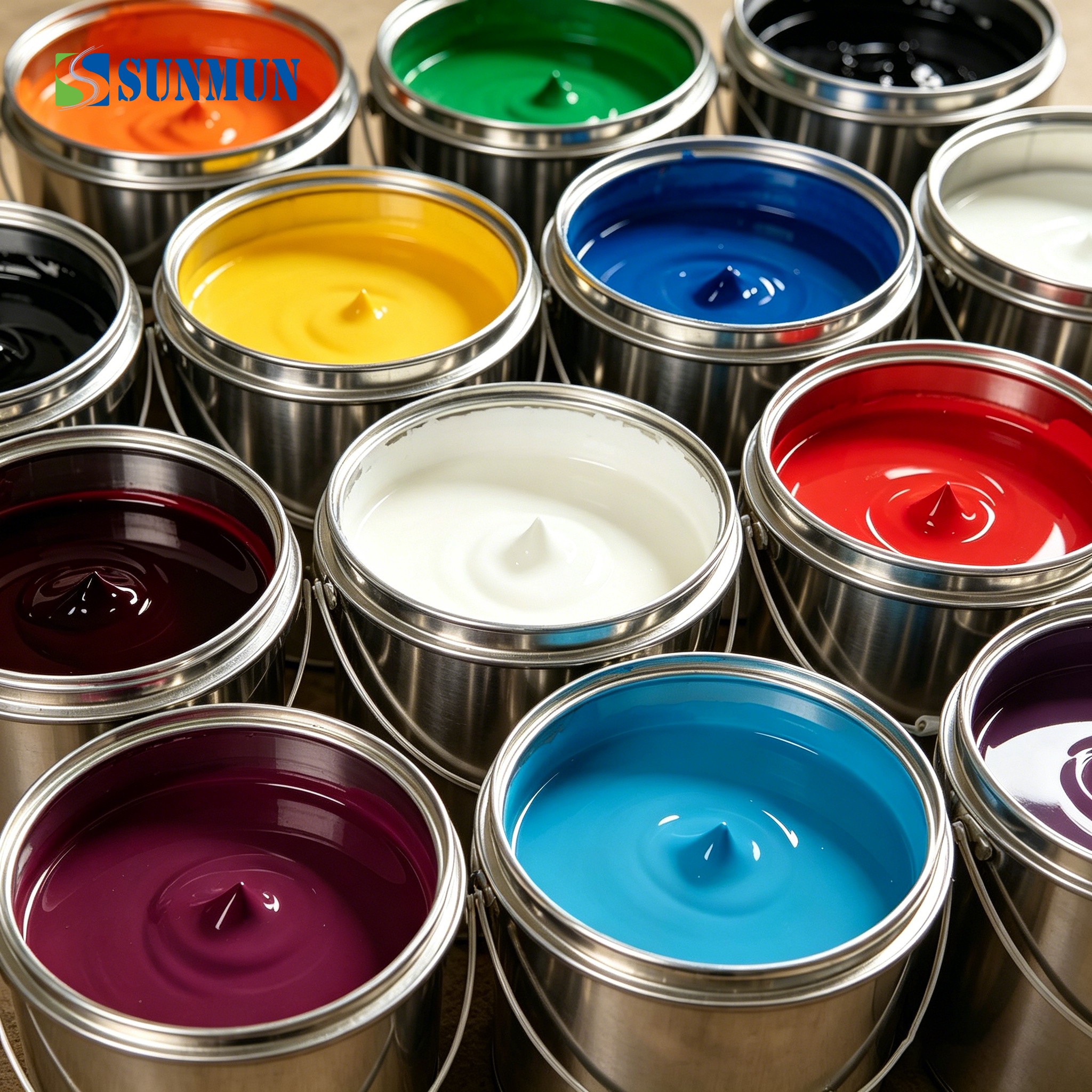
In modern plastics manufacturing, the demand for faster cycle times, tighter color consistency, and reduced operational waste has never been greater. High-speed plastic processing environments — including injection molding, blown film extrusion, and continuous sheet extrusion lines — place enormous stress on every input material, including colorants. Choosing the right coloring system is not simply a matter of preference; it directly affects productivity, quality, and profitability. This is precisely where liquid color masterbatch has emerged as a technically superior solution for processors who cannot afford inconsistency at high throughput speeds.
Unlike solid color concentrates, liquid color masterbatch offers a unique combination of dispersion efficiency, dosing precision, and thermal compatibility that aligns naturally with the extreme demands of high-speed processing lines. Understanding why this coloring format excels in these environments — and what specifically makes it a preferred choice among technically demanding manufacturers — requires a closer look at the chemistry, the mechanics, and the economics of high-speed plastic coloring.

The Core Challenges of Coloring Plastics at High Speeds
Why Standard Colorants Struggle at High Throughput
High-speed plastic processing lines operate at screw speeds and output rates that leave very little residence time for any additive or colorant to disperse properly. Solid masterbatch pellets, while widely used in slower or more forgiving processes, depend heavily on mechanical shear and extended melt contact time to achieve complete dispersion. When processing speeds increase, this critical dispersion window narrows sharply, creating risks of color streaking, uneven distribution, and off-spec products.
The physical nature of solid colorant formats also introduces melting lag — the time required for a solid pellet to transition from a discrete particle into a fully integrated component of the melt stream. At high screw speeds, this lag becomes a meaningful processing liability. Processors frequently encounter issues like color specks, surface defects, and inconsistent batch-to-batch color reproduction when solid colorants are pushed beyond their designed operating window.
Liquid color masterbatch, by contrast, enters the melt stream already in a fluid state. There is no melting lag, no reliance on pellet-to-pellet blending ratios, and no dependency on extended shear to initiate dispersion. This inherent advantage becomes increasingly significant as processing speeds climb, making liquid color masterbatch a technically logical choice for any operation running near or at the limits of its equipment capacity.
Thermal Sensitivity in Fast-Moving Melt Streams
High-speed processing also generates more frictional heat and shorter melt exposure cycles, which can degrade heat-sensitive pigments in poorly formulated colorant systems. The thermal profile of a high-speed extrusion or molding line is fundamentally different from a slower process, and colorant formulations must be engineered to match. Liquid color masterbatch formulations are specifically designed with carrier systems and pigment encapsulation technologies that maintain color stability even under rapid thermal cycling and high shear conditions.
This thermal resilience is not accidental. Formulators of liquid color masterbatch select carrier fluids and pigment surface treatments that stabilize color performance across a wider thermal window than many solid alternatives. The result is a colorant that delivers consistent hue, saturation, and lightfastness regardless of the fluctuations inherent in fast-running production lines. For quality-critical applications such as medical packaging, automotive components, or consumer goods, this stability translates directly into reduced scrap rates and tighter specification compliance.
Precision Dosing and Process Integration Advantages
Accurate Metering at Variable Production Speeds
One of the most compelling reasons to use liquid color masterbatch in high-speed environments is the precision with which it can be metered and injected into the process stream. Modern liquid dosing pumps and injection systems are capable of delivering liquid color masterbatch at extremely accurate flow rates, adjusting dynamically to changes in line speed, output rate, or resin throughput. This level of responsiveness is simply not achievable with gravimetric solid masterbatch dosing systems, which require mechanical adjustments and recalibration when processing speeds change.
Accurate dosing is not merely a quality issue — it is an economic one. Over-dosing solid colorants is a common response to dispersion uncertainty, where processors add excess colorant to ensure full color development even when conditions are suboptimal. Liquid color masterbatch eliminates this guesswork. Because it disperses immediately and completely upon contact with the melt stream, the dosing rate can be held at the minimum effective level, reducing colorant consumption and lowering cost-per-kilogram of finished product.
In high-volume continuous processing environments, even small improvements in dosing precision compound rapidly into significant cost savings. Manufacturers who transition from solid to liquid color masterbatch in high-speed operations frequently report measurable reductions in colorant usage, alongside improvements in color consistency metrics tracked through spectrophotometric quality control systems.
Elimination of Pre-Blending and Color Change Efficiency
High-speed production lines are often scheduled for frequent color changes, particularly in packaging and consumer goods sectors where short production runs and rapid SKU turnover are standard. Liquid color masterbatch dramatically simplifies the color change process. Because the colorant is injected directly into the process rather than pre-blended with resin pellets, color changes require only flushing the injection system and switching to the new liquid color. There is no need to purge large volumes of pre-blended material or to manage the physical segregation of solid masterbatch batches.
The reduction in color change downtime translates directly into increased machine uptime and reduced waste at color transitions. For processors managing ten or more color changes per shift across multiple lines, the cumulative efficiency gains from using liquid color masterbatch can justify the investment in dosing equipment within a relatively short payback period. This operational agility is one of the clearest economic arguments in favor of adopting liquid color masterbatch in any high-speed processing environment.
Dispersion Quality and Final Product Aesthetics
Superior Pigment Distribution in Demanding Applications
Color quality in finished plastic products is ultimately determined by the uniformity and completeness of pigment dispersion throughout the polymer matrix. Liquid color masterbatch achieves this through a fundamentally different mechanism than solid alternatives. The pigments in liquid color masterbatch are already pre-dispersed in a carrier fluid at the point of manufacture, using high-energy milling and surface treatment processes that break pigment agglomerates down to their primary particle size. When this pre-dispersed liquid contacts the melt stream, it integrates rapidly and completely, with no residual agglomerates to create surface defects or optical inconsistencies.
This matters enormously in transparent or translucent applications, thin-wall packaging films, and any product where surface quality is a primary specification. The absence of undispersed pigment particles eliminates haze, speckling, and surface roughness that can arise from incomplete dispersion of solid colorants, particularly at the high shear rates encountered in fast-running processes. Processors in sectors such as flexible packaging, specialty films, and precision molding have found liquid color masterbatch to be an enabling technology for meeting increasingly tight aesthetic and functional requirements.
Consistency Across Long Production Runs
High-speed processing environments are typically designed to maximize continuous run length, and color consistency across these extended runs is a critical quality parameter. Liquid color masterbatch delivers exceptional run-to-run and within-run consistency because its dosing is governed by fluid flow rates rather than by mechanical feeding of solid particles. Liquid delivery systems are inherently less susceptible to bridging, clumping, segregation, or feed-rate variation — all of which are common failure modes in solid masterbatch delivery systems operating under vibration, temperature variation, or high-speed conditions.
The result is a finished product color profile that remains tightly controlled from the start of a production run to the end, regardless of run length. For manufacturers supplying color-critical markets such as cosmetics packaging, branded consumer goods, or regulatory-controlled medical devices, this consistency is not a convenience — it is a contractual requirement. Liquid color masterbatch provides the technical foundation to meet these standards reliably and repeatably in high-speed production contexts.
Economic and Sustainability Considerations
Reducing Waste and Improving Raw Material Efficiency
The financial case for liquid color masterbatch in high-speed environments extends well beyond colorant cost per unit. When factoring in scrap rates from color defects, waste generated during color changes, and the cost of reworking off-spec material, the total cost of coloring with solid masterbatch in fast-running lines frequently exceeds that of liquid alternatives even when the unit price of the solid colorant appears lower. Liquid color masterbatch reduces these hidden costs by improving first-pass quality rates, minimizing transition waste, and enabling tighter inventory management through just-in-time liquid delivery systems.
Sustainability considerations also favor liquid color masterbatch in several important ways. Lower colorant loading rates — made possible by the superior dispersion efficiency of liquid systems — mean fewer pigment resources are consumed per kilogram of finished product. Reduced scrap and rework rates lower the overall energy and material intensity of production. For manufacturers with corporate sustainability commitments or customers requiring environmental product declarations, these efficiency gains contribute measurably to reducing the environmental footprint of plastic product manufacturing.
Equipment Compatibility and Implementation Pathway
A common concern among processors considering the switch to liquid color masterbatch is the capital requirement for new dosing equipment. In practice, modern liquid colorant dosing systems are available across a wide range of capacities and price points, and many high-speed processing lines can be retrofitted with liquid dosing capability without major structural modifications. The dosing systems designed for liquid color masterbatch are compact, cleanable, and engineered to integrate with standard process control architectures, including PLC-based automation systems common in contemporary plastic processing facilities.
The implementation pathway for liquid color masterbatch adoption typically begins with a technical audit of existing processing lines to identify which machines and product families would benefit most from the switch. Lines running the highest speeds, requiring the most frequent color changes, or experiencing the highest colorant-related defect rates are typically the first candidates. Once operational data from these pilot implementations is available, expansion decisions can be made on a clear cost-benefit basis, with real production data supporting the business case for broader adoption of liquid color masterbatch across the facility.
FAQ
What types of plastic processing equipment are best suited for liquid color masterbatch?
Liquid color masterbatch is well-suited for a broad range of plastic processing equipment, including injection molding machines, single-screw and twin-screw extruders, blow molding lines, and blown film equipment. It is particularly advantageous on high-speed equipment where residence time is short and dispersion of solid colorants is challenging. Dosing systems for liquid color masterbatch can be integrated into most standard equipment configurations with appropriate injection port hardware.
Is liquid color masterbatch compatible with all types of resins?
Liquid color masterbatch can be formulated to be compatible with a wide range of polymer resins, including polyethylene, polypropylene, polystyrene, ABS, PET, and various engineering plastics. The carrier system used in the liquid color masterbatch formulation is typically selected to match the rheological and chemical requirements of the target resin. It is important to confirm compatibility between the specific liquid color masterbatch formulation and the resin being processed, particularly for specialty or filled polymers.
How does liquid color masterbatch affect the mechanical properties of the finished plastic part?
When used at recommended dosing levels, liquid color masterbatch typically has minimal impact on the mechanical properties of the finished part. Because the loading rates for liquid color masterbatch are generally lower than those for solid masterbatch — due to the superior dispersion efficiency — the dilution effect on the base polymer is reduced. For applications with tight mechanical property specifications, compatibility testing and rheological assessment should be conducted during the product qualification process.
What are the storage and handling requirements for liquid color masterbatch?
Liquid color masterbatch should be stored in sealed containers away from direct sunlight and extreme temperatures, following the guidelines provided by the formulator. Most liquid color masterbatch products have defined shelf lives and should be used within the recommended period to ensure pigment stability and flow consistency. Handling procedures typically involve standard industrial chemical safety practices, including appropriate personal protective equipment and spill containment measures consistent with the safety data sheet for the specific product.
Table of Contents
- The Core Challenges of Coloring Plastics at High Speeds
- Precision Dosing and Process Integration Advantages
- Dispersion Quality and Final Product Aesthetics
- Economic and Sustainability Considerations
-
FAQ
- What types of plastic processing equipment are best suited for liquid color masterbatch?
- Is liquid color masterbatch compatible with all types of resins?
- How does liquid color masterbatch affect the mechanical properties of the finished plastic part?
- What are the storage and handling requirements for liquid color masterbatch?