
 EN


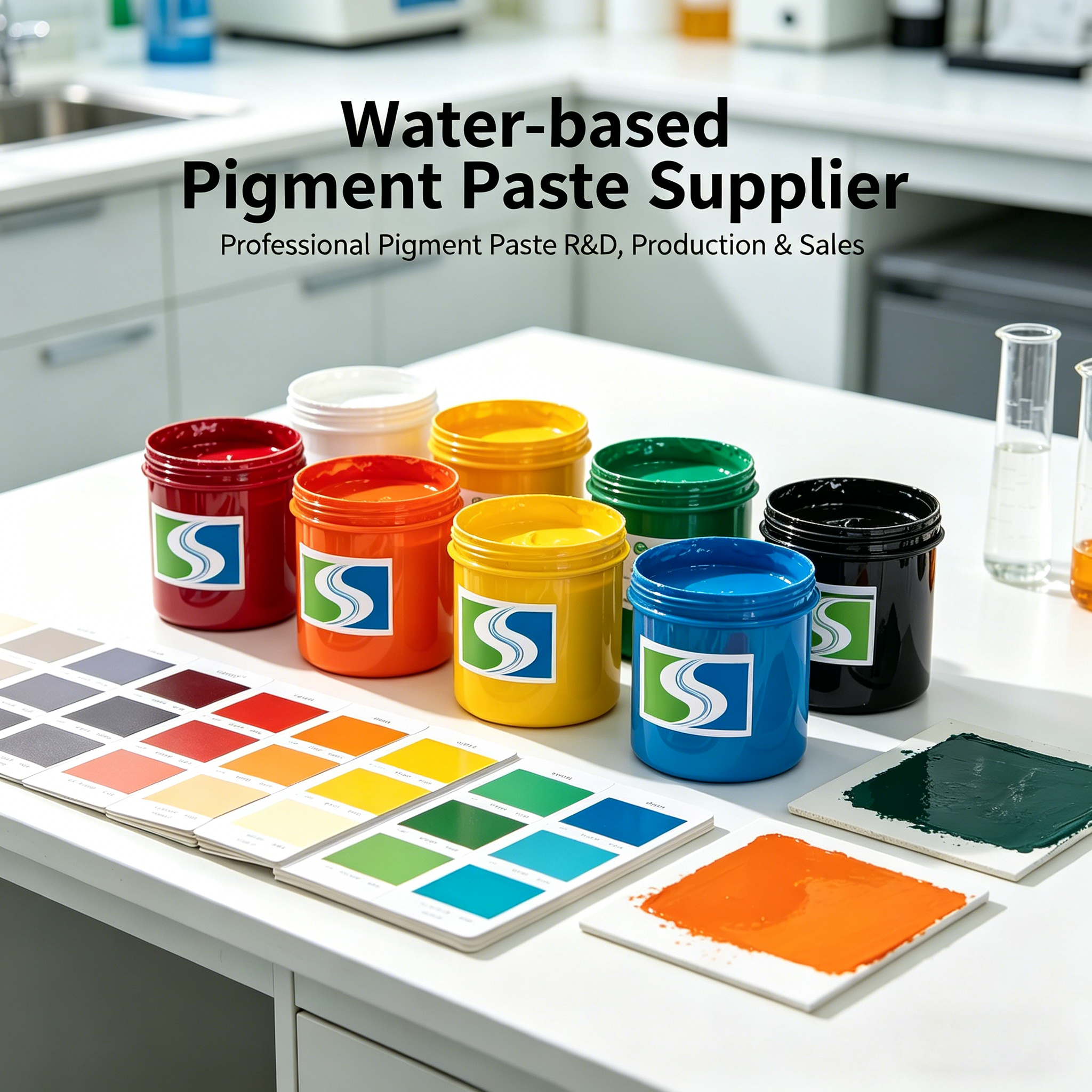
The shift toward sustainable manufacturing practices has fundamentally reshaped how industries approach coating solutions. Water-based colorant technology represents one of the most significant advancements in this transition, offering manufacturers a path to reduce environmental impact without compromising performance. Unlike solvent-based alternatives, a water-based colorant formulation delivers color consistency, durability, and regulatory compliance simultaneously, making it an increasingly critical choice for industrial operations facing stricter environmental standards.

The adoption of water-based colorant solutions reflects a broader industry recognition that sustainability and performance are no longer opposing forces. Modern formulations of water-based colorant have evolved far beyond early limitations, now delivering superior color retention, UV stability, and chemical resistance comparable to traditional solvent systems. This convergence makes water-based colorant the preferred choice for manufacturers who refuse to compromise on quality while embracing environmental responsibility.
Environmental Compliance and Regulatory Advantage
Reducing Volatile Organic Compound Emissions
One of the most compelling reasons to adopt water-based colorant is its dramatically lower volatile organic compound (VOC) content. Traditional solvent-based systems release significant quantities of harmful vapors during application and curing, contributing to air pollution and creating workplace safety concerns. A water-based colorant contains up to 95% fewer VOCs than conventional alternatives, directly supporting compliance with increasingly stringent environmental regulations across North America, Europe, and Asia-Pacific regions. This reduction in emissions not only protects workers and surrounding communities but also eliminates costly fines and operational shutdowns related to air quality violations.
Meeting Global Environmental Standards
Regulatory frameworks worldwide have begun mandating lower VOC thresholds for industrial coatings. The European Union's Directive on Volatile Organic Compounds, California's Air Resources Board regulations, and similar initiatives in other jurisdictions all push manufacturers toward low-emission solutions. A water-based colorant naturally aligns with these requirements, providing a pathway to compliance without requiring expensive coating system overhauls. Manufacturers using water-based colorant benefit from simplified reporting, reduced permitting complexity, and protection against future regulatory tightening that could render older technologies obsolete.
Performance Characteristics and Industrial Durability
Color Stability and Long-Term Aesthetic Quality
Water-based colorant technology has advanced considerably, now offering exceptional color stability under challenging industrial conditions. Modern formulations resist fading from prolonged UV exposure, maintain vibrancy through temperature cycling, and preserve appearance across humid, marine, and chemical-intensive environments. The consistency of water-based colorant ensures that batch-to-batch variations remain minimal, supporting quality control standards and brand reputation in markets where visual consistency directly impacts customer perception. Industrial manufacturers report that premium water-based colorant products deliver color retention metrics exceeding 95% over five-year exposure cycles, rivaling or surpassing traditional solvent-based systems.
Chemical and Corrosion Resistance
Contrary to outdated perceptions, water-based colorant formulations now deliver robust chemical and corrosion resistance suitable for demanding industrial applications. Specialized water-based colorant systems have been engineered to resist aggressive substances including oils, fuels, acids, and alkaline cleaners commonly encountered in manufacturing, automotive, and marine environments. The protective barrier created by advanced water-based colorant coatings effectively guards underlying substrates from rust, oxidation, and material degradation. This durability eliminates the false economy of choosing lower-cost solvent systems that require more frequent repainting and maintenance interventions.
Cost-Benefit Analysis and Long-Term Value
Initial Investment and Total Cost of Ownership
While premium water-based colorant products may carry slightly higher upfront material costs compared to basic solvent-based alternatives, the total cost of ownership tells a compelling story. When factoring in reduced worker safety expenses, eliminated regulatory penalties, lower disposal costs for water-based colorant waste, and extended coating lifespan, manufacturers consistently achieve superior financial outcomes. The water-based colorant approach also reduces the infrastructure investment needed for solvent capture and disposal systems, transforming a liability into simplified waste management. Forward-thinking manufacturers recognize that adopting water-based colorant represents not an expense but a strategic investment in operational efficiency and long-term competitiveness.
Productivity and Application Efficiency
Water-based colorant systems have been optimized for modern industrial spray equipment, offering application flexibility that rivals traditional systems. The extended pot life of quality water-based colorant reduces waste during production runs, while improved flow characteristics minimize application defects and rework requirements. Manufacturers can achieve consistent results with water-based colorant across diverse application methods including HVLP spray, electrostatic application, and brush-on techniques. The reduced drying times of certain water-based colorant formulations also enable faster production throughput, directly improving manufacturing velocity and reducing inventory holding costs.
Practical Implementation Guidance for Industrial Adoption
Substrate Preparation and Surface Management
Successful deployment of water-based colorant requires careful substrate preparation and understanding of surface compatibility factors. Water-based colorant performs optimally on properly cleaned, primed surfaces free of contaminants that might inhibit adhesion. Manufacturers should verify that existing primer systems are compatible with water-based colorant before transitioning production lines. Consultation with technical specialists in water-based colorant chemistry ensures proper surface preparation protocols, preventing adhesion failures and ensuring the full performance potential of the water-based colorant system is realized in field applications.
Quality Control and Performance Verification
Implementing robust quality assurance protocols ensures that water-based colorant systems perform consistently across production batches. Advanced testing methodologies including accelerated weathering studies, salt spray resistance evaluation, and chemical immersion testing validate that water-based colorant meets or exceeds industry standards. Manufacturers adopting water-based colorant benefit from transparent documentation of performance metrics, supporting technical defense of coating specifications and enabling confident customer communication about the advantages of water-based colorant technology.
FAQ
Does water-based colorant provide the same color range as solvent-based systems?
Modern water-based colorant technology offers an extensive color palette comparable to solvent systems, with hundreds of formulations available. Advanced pigment dispersion techniques have overcome early limitations, allowing water-based colorant to achieve vibrant, complex colors including metallics and special effects. Manufacturers specify water-based colorant options that meet their aesthetic requirements while gaining environmental and compliance benefits simultaneously.
How does water-based colorant perform in high-temperature industrial applications?
Specialized water-based colorant formulations have been engineered for elevated temperature environments, maintaining color integrity and coating adhesion under thermal stress. These premium water-based colorant systems utilize heat-resistant resins and pigment technologies that withstand sustained exposure to temperatures exceeding 200 degrees Fahrenheit in certain applications. Verification through thermal cycling tests confirms that water-based colorant maintains performance in demanding temperature scenarios.
Can existing coating equipment be used with water-based colorant without modification?
Most conventional spray equipment accommodates water-based colorant with minimal adjustments, though certain modifications may optimize performance. Water-based colorant requires attention to fluid viscosity, pressure settings, and material flow rates that differ from solvent-based systems. Consultation with equipment suppliers ensures that water-based colorant can be applied effectively using existing infrastructure, though some manufacturers invest in upgraded equipment specifically optimized for water-based colorant application to maximize efficiency.