
 EN
EN


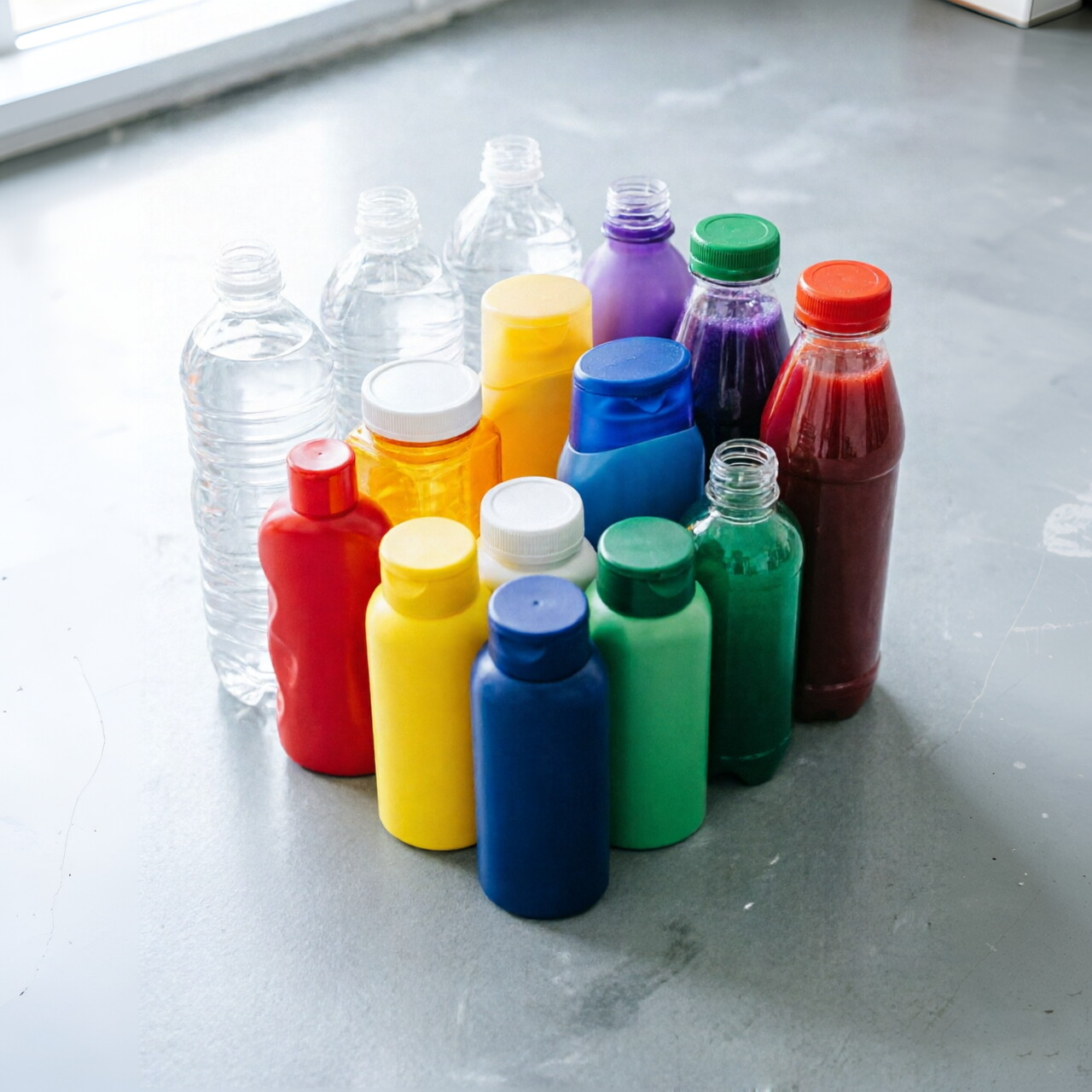
In large-scale plastic processing, achieving uniform, repeatable color across every batch is one of the most demanding quality challenges manufacturers face. A single shift in hue, saturation, or brightness can render entire production runs unusable, trigger costly rework, and damage client relationships built on strict specification compliance. The colorant chosen for any given production line is not simply a pigment carrier — it is a precision tool that governs how color behaves under heat, pressure, and high-volume throughput conditions.
Understanding how a colorant functions within large-scale plastic processing environments requires looking beyond simple color matching. It means examining the physical and chemical mechanisms through which a colorant maintains stability across thousands of cycles, interacts with resin systems, and responds to process variables that shift from machine to machine and shift to shift. This article explores the critical role colorant plays in sustaining color consistency at industrial scale, and why its selection, formulation, and handling all matter enormously to the final output.
The Role of Colorant in Industrial-Scale Color Uniformity
How Colorant Disperses Within the Polymer Matrix
The most fundamental function of any colorant in plastic manufacturing is dispersion. For color to remain consistent, the colorant must distribute itself evenly throughout the entire polymer melt during processing. Poor dispersion leads to streaking, mottling, and uneven color distribution — defects that become unacceptable in high-volume runs where visual uniformity is contractually mandated.
Modern colorant formulations are engineered to achieve what is known as 'primary particle separation' — the breakdown of pigment agglomerates into individual particles that distribute uniformly throughout the resin. This is accomplished through careful carrier selection, surface treatment of pigment particles, and the use of dispersing agents that lower interfacial energy between the pigment and the polymer. The result is a colorant that integrates cleanly without requiring extreme processing conditions to achieve consistency.
In large-scale operations, where extruders and injection molding machines run continuously for hours or days, the colorant must maintain this dispersion behavior throughout the entire production window. Drift in dispersion quality over time is one of the most common sources of inter-batch color variation, making dispersion stability a non-negotiable requirement for industrial colorant systems.
Carrier Resin Compatibility and Its Impact on Color Stability
A colorant is rarely used alone. It is typically delivered to the production line as a masterbatch or compound, meaning the colorant pigments are pre-dispersed in a carrier resin. The compatibility between this carrier and the base polymer being processed determines how seamlessly the colorant integrates into the melt, and how stable the resulting color remains under shear and thermal stress.
When the carrier resin and the base polymer share similar melt flow indices and chemical structures, the colorant disperses rapidly and evenly at letdown ratios that are easy to control. Mismatches in viscosity or polarity can cause the colorant to pool, separate, or react unpredictably under processing heat, all of which undermine the color consistency that large-scale operations depend on.
Selecting the right carrier for a given polymer system is therefore one of the most consequential technical decisions in the colorant specification process. Formulators working in polyolefin-dominant environments, for example, must choose carriers that melt and flow at rates closely matched to polypropylene or polyethylene substrates, ensuring the colorant blends without introducing processing anomalies at scale.
Thermal Stability of Colorant Under High-Temperature Processing
Why Thermal Resistance Defines Colorant Performance
Large-scale plastic processing — whether injection molding, extrusion, or blow molding — subjects materials to sustained high temperatures. Engineering thermoplastics such as polycarbonate, nylon, and ABS are processed at temperatures that can exceed 280°C. At these temperatures, a colorant that lacks sufficient thermal stability will degrade, shift in hue, or lose tinting strength, producing colors that differ from the approved standard.
High-performance colorant systems are formulated with heat-stable organic and inorganic pigments that can withstand the thermal demands of these processes without undergoing chemical breakdown. Inorganic pigments such as iron oxides and mixed metal oxides are particularly valued in demanding applications because of their inherent thermal robustness. Organic pigments, while offering brighter and more transparent colors, require careful selection to ensure they meet the thermal requirements of the target polymer process.

In practice, a colorant is often evaluated through a series of thermal stress tests before being approved for large-scale use. These tests simulate the time-temperature exposure of actual processing cycles to confirm that the colorant retains its spectral profile and tinting strength throughout the anticipated production window. Passing these tests gives manufacturers confidence that the colorant will deliver consistent color from the first cycle to the last.
The Impact of Residence Time on Color Drift
Residence time — the duration for which material remains in the plasticating unit before being injected or extruded — is a variable that large-scale processors must manage carefully when working with colorant. Extended residence times at elevated temperatures amplify the degradation risk for any pigment that is not thermally stable, causing progressive color shift that may not be immediately visible but accumulates over a production run.
A well-formulated colorant accounts for realistic worst-case residence times in its thermal stability profile. This means the colorant must retain its color performance not only under standard cycle conditions but also during machine startups, stoppages, and purging events where material may dwell in the barrel for extended periods. Consistency in these transitional moments is critical for maintaining quality across an uninterrupted large-scale operation.
Process engineers working with colorant systems should always request full thermal stability data from suppliers, including the time-temperature profile under which the colorant was evaluated. This data provides the foundation for setting appropriate processing windows and for detecting potential drift risks before they manifest as production defects.
Colorant Concentration Control and Batch-to-Batch Repeatability
Letdown Ratio Management in High-Volume Lines
In large-scale plastic processing, colorant is typically introduced into the natural resin at a defined letdown ratio — the proportion of colorant masterbatch or compound to base resin. Even small deviations from the target letdown ratio can produce visible color differences, particularly in applications where thin-wall geometry amplifies any variation in colorant concentration.
Automated dosing systems are widely used in industrial environments to maintain letdown ratio precision, but their accuracy is only as good as the colorant's own consistency from batch to batch. A high-quality colorant is manufactured to tight pigment loading tolerances, ensuring that every kilogram of masterbatch delivered to the line contains the same tinting strength as the last. Variability in pigment loading within the colorant itself is a hidden source of color inconsistency that many processors overlook.
For processors managing multiple simultaneous production lines, colorant consistency at the formulation level becomes even more important. When the same color specification must be met across several machines running in parallel, any variation in colorant tinting strength from one batch to another will translate directly into visible inter-machine color differences — a quality failure that is difficult to diagnose and even harder to correct mid-run.
Quality Control Systems That Support Colorant Consistency
Leading colorant manufacturers support large-scale processors with robust quality control documentation, including spectrophotometric data for every production batch. This data allows processors to verify incoming colorant against approved color standards before it reaches the production line, catching any drift in the colorant itself before it affects finished parts.
Spectrophotometric verification — using instruments that measure color in terms of delta E values against a standard — has become a standard practice in industries where color consistency is a contractual requirement. When the colorant arrives with a certificate of conformance that includes measured color data, processors can integrate incoming inspection into their quality system and trace any color non-conformance back to its root cause with confidence.
Beyond incoming inspection, processors who invest in inline color measurement technology can monitor colorant performance in real time during the run, flagging deviations before they result in rejected parts. This closed-loop approach to colorant management transforms color control from a reactive quality check into a proactive process parameter — a shift that delivers measurable efficiency gains in large-scale operations.
Environmental and Regulatory Factors Affecting Colorant Selection
Compliance Requirements Shaping Modern Colorant Choices
Large-scale plastic processors operating in regulated markets must ensure that the colorant used in their products meets applicable chemical safety and environmental regulations. Frameworks such as REACH in Europe, RoHS for electronics, and food-contact standards in packaging markets impose strict limits on the substances that can be present in finished plastic goods. These requirements directly influence which colorants are permissible for use in specific applications.
A colorant that contains heavy metal pigments restricted under REACH, for example, cannot be used in consumer goods destined for the European market. Processors must therefore work with colorant suppliers who provide full substance disclosure and maintain regulatory compliance documentation current with evolving legislation. This due diligence protects not only product legality but also brand reputation in markets where environmental responsibility is a commercial differentiator.
The shift toward safer colorant chemistry has accelerated significantly in recent years, driven by both regulatory pressure and customer expectations. Many large-scale processors now require their colorant suppliers to reformulate legacy products that rely on restricted substances, substituting compliant alternatives that meet both performance and regulatory standards without compromise.
Sustainability Considerations in Colorant Formulation
Sustainability is increasingly shaping the way large-scale plastic processors specify colorant. Demand for colorant systems that are compatible with mechanical recycling streams, that support the use of recycled content in host resins, and that minimize process waste is growing across packaging, automotive, and consumer goods sectors. A colorant that performs well in virgin resin systems but causes contamination or color instability in recycled blends is no longer commercially viable for many end markets.
Formulators are responding to this challenge by developing colorant systems specifically designed for recycling compatibility — colorants that do not introduce sorting errors in near-infrared recycling detection systems, and that maintain acceptable color performance when processed alongside post-consumer resin. For large-scale processors committed to circular economy targets, these properties are becoming as important as thermal stability or dispersion quality.
Choosing a colorant that supports both current performance requirements and emerging sustainability mandates positions processors to adapt to changing market conditions without having to reformulate and requalify their color systems every time regulatory or customer requirements evolve. It is a strategic investment, not just a technical specification decision.
FAQ
What makes a colorant suitable for large-scale plastic processing?
A colorant suitable for large-scale plastic processing must offer excellent thermal stability, consistent dispersion in the host polymer, tight batch-to-batch pigment loading tolerances, and compatibility with the carrier and base resin system. It should also meet the regulatory requirements of the target market and be supported by comprehensive quality control documentation from the supplier.
How does colorant concentration affect color consistency across long production runs?
Colorant concentration, or letdown ratio, must be tightly controlled throughout a production run to maintain color consistency. Even minor deviations in the amount of colorant introduced into the resin stream can cause visible color shifts, particularly in thin-wall parts or in products with high surface-to-volume ratios. Automated dosing systems combined with colorants manufactured to precise pigment loading tolerances are the most reliable approach to concentration control.
Can a colorant maintain consistency when used across multiple production machines simultaneously?
Yes, but only if the colorant itself is manufactured to consistent quality standards and if each machine is operated within the same defined processing window. When running parallel machines to the same color specification, any variation in the colorant's tinting strength from batch to batch will produce inter-machine color differences. Processors should require spectrophotometric batch certificates from their colorant supplier and verify incoming materials before distribution to individual machines.
How do sustainability requirements influence colorant selection in modern plastic manufacturing?
Sustainability requirements are pushing processors toward colorant formulations that are free of restricted substances, compatible with mechanical recycling processes, and transparent in their chemical composition. Colorants that interfere with near-infrared sorting systems or that degrade recycled resin quality are increasingly disqualified from packaging and consumer goods applications. Processors who specify sustainability-compatible colorant systems early in the product development process reduce the risk of costly reformulation as regulatory and customer requirements tighten.
Table of Contents
- The Role of Colorant in Industrial-Scale Color Uniformity
- Thermal Stability of Colorant Under High-Temperature Processing
- Colorant Concentration Control and Batch-to-Batch Repeatability
- Environmental and Regulatory Factors Affecting Colorant Selection
-
FAQ
- What makes a colorant suitable for large-scale plastic processing?
- How does colorant concentration affect color consistency across long production runs?
- Can a colorant maintain consistency when used across multiple production machines simultaneously?
- How do sustainability requirements influence colorant selection in modern plastic manufacturing?