
 EN
EN


Achieving consistent, high-quality color dispersion in latex product manufacturing represents one of the most critical technical challenges facing modern coatings and adhesive producers. When pigment paste enters the manufacturing workflow, it fundamentally transforms how color particles distribute throughout the latex matrix, ensuring uniform hue, superior coverage, and predictable performance across every batch. The quality of pigment paste directly determines whether your finished latex products meet strict industry specifications for color consistency, hiding power, and long-term stability.
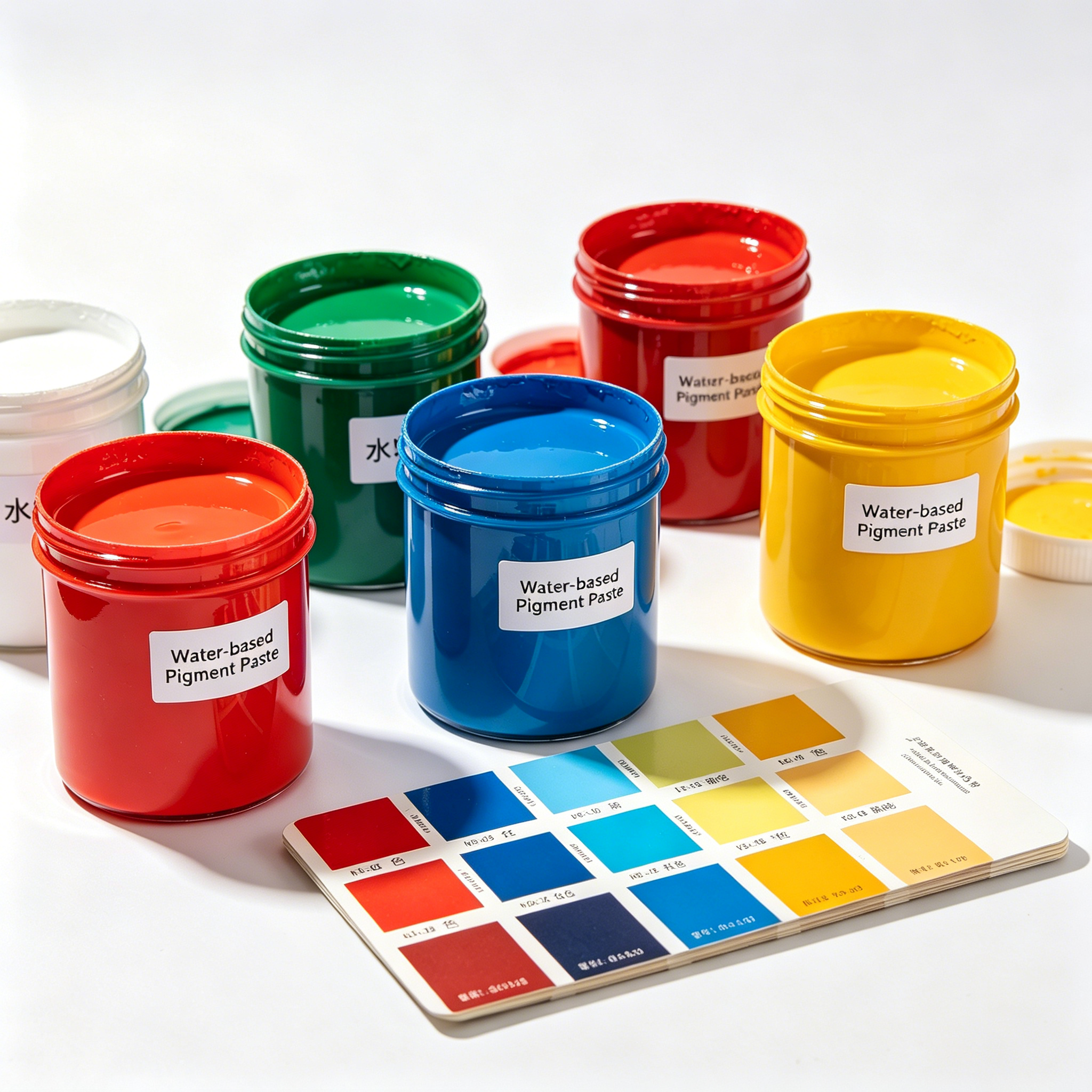
The dispersion quality of pigment paste in latex systems depends on multiple interrelated factors, including particle size reduction, surface wetting, flow behavior, and chemical compatibility with the base latex formulation. Latex manufacturers who implement specialized pigment paste solutions experience measurable improvements in production efficiency, reduced rework rates, and enhanced final product performance. Understanding how pigment paste improves dispersion quality helps manufacturers make informed decisions about ingredient selection and process optimization.
How Pigment Paste Enhances Color Particle Distribution
Particle Size Reduction and Uniformity
The primary mechanism by which pigment paste improves dispersion quality centers on particle size reduction and mechanical uniformity. High-quality pigment paste undergoes intensive pre-milling that breaks down color particle aggregates into optimal sub-micron dimensions, significantly smaller than raw pigments would achieve during standard latex mixing. When pigment paste with pre-dispersed particles enters the manufacturing process, fewer shear forces are required to achieve full dispersion, meaning manufacturers can reduce mixing time while improving consistency. This size uniformity ensures that every latex particle encounters evenly distributed color particles, eliminating the mottled appearance and color variation that plague products made with poorly dispersed pigments.
Wetting Agent Integration and Surfactant Synergy
Quality pigment paste incorporates specialized wetting agents and surfactant systems that improve how color particles interact with the latex medium. These additives within pigment paste create a molecular bridge between hydrophobic pigment surfaces and the aqueous latex environment, preventing particle re-aggregation and settling. The surfactant chemistry embedded in premium pigment paste works synergistically with the base latex binder system, reducing interfacial tension and promoting uniform particle spacing throughout the matrix. Manufacturers report that pigment paste with optimized wetting chemistry reduces mud cracking, improves flow behavior during application, and maintains color uniformity across storage periods that would otherwise result in settling or separation.
Performance Improvements in Latex Dispersion Quality
Enhanced Color Consistency and Hiding Power
When pigment paste achieves superior dispersion quality in latex products, the visible results translate directly to color consistency metrics and hiding power performance. Uniformly dispersed pigment paste ensures that every microliter of finished coating contains the same pigment concentration, eliminating batch-to-batch color variation that customer specifications explicitly forbid. The improved particle distribution achieved through quality pigment paste allows manufacturers to meet hiding power requirements with lower pigment loading, reducing raw material costs and improving final product economics. Laboratory testing consistently demonstrates that latex formulations using optimized pigment paste achieve superior opacities and more stable color values compared to systems relying on direct pigment incorporation.
Stability During Storage and Transport
Pigment paste formulated with advanced anti-settling chemistry and thixotropic modifiers maintains dispersion stability throughout the product lifecycle, from manufacturing through customer application. Unlike systems where raw pigments gradually settle or flocculate during storage, quality pigment paste prevents re-aggregation through carefully balanced colloid chemistry. Manufacturers using pigment paste specifically optimized for latex systems report significantly reduced product complaints related to color shift, settling, or separation during warehouse storage. This stability advantage translates to longer shelf life, reduced customer quality issues, and lower field failure rates that would otherwise damage brand reputation and generate costly returns.
Integration Strategies and Manufacturing Optimization
Pigment Paste Selection for Latex Compatibility
Successful incorporation of pigment paste into latex manufacturing requires matching the paste chemistry to the specific latex system, whether acrylic, vinyl-acrylic, styrene-butadiene, or specialty formulations. Not all pigment paste products deliver equivalent dispersion quality across different latex chemistries; selecting pigment paste formulated specifically for your latex type ensures optimal wetting, minimal viscosity impact, and maximum color performance. Technical data sheets should specify compatibility testing results and recommended letdown ratios that demonstrate the pigment paste's ability to deliver consistent dispersion quality within your production parameters. Manufacturers investing time in proper pigment paste selection eliminate unexpected viscosity increases, separation issues, or color drift that arise from incompatible paste systems forced into latex matrices without proper validation.
Process Control and Mixing Protocol
Achieving maximum dispersion quality from pigment paste requires disciplined mixing protocols that balance adequate shear forces with production efficiency. Introducing pigment paste during the early mixing stage, when the latex base maintains moderate viscosity, allows the paste to distribute evenly before particle hydration and binder absorption complicate further mixing. Quality manufacturers establish standardized letdown procedures specifying pigment paste dosage, mixing duration, and temperature control to ensure repeatability and dispersion quality batch after batch. Advanced dispersion monitoring using techniques such as spectrophotometry, particle size analysis, and viscosity measurement enables real-time process feedback, allowing operators to confirm that incoming pigment paste and current manufacturing conditions combine to produce optimal dispersion quality.
Measurable Business and Technical Outcomes
Cost Efficiency and Waste Reduction
Latex manufacturers who implement high-quality pigment paste systems report measurable reductions in color rework, batch rejection, and customer returns tied to dispersion-related defects. When pigment paste delivers consistent dispersion quality, the percentage of production requiring re-processing drops dramatically, improving plant throughput and reducing waste generation. The chemistry built into quality pigment paste often enables lower total pigment loading to achieve specified color strength, directly lowering raw material costs per unit. These compounding economic advantages make premium pigment paste investment financially justified, particularly for manufacturers processing high volumes or serving customers with strict color tolerance requirements.
Quality Compliance and Regulatory Performance
Latex products manufactured with reliable pigment paste achieve more predictable color consistency, easier batch approval processes, and stronger compliance with industry standards governing color matching and stability. When dispersion quality remains consistent across production runs, quality assurance teams spend less time investigating batch variability, accelerating product release and reducing documentation burden. Customers receiving latex products made with optimized pigment paste experience fewer color complaints, fewer field rejections, and greater confidence in product reliability, strengthening the manufacturer's market reputation and competitive positioning.
FAQ
Why does pigment paste quality directly affect latex dispersion performance?
Pigment paste quality affects latex dispersion because it determines particle size uniformity, wetting chemistry, and surfactant effectiveness that govern how color particles interact with the latex matrix. Premium pigment paste arrives pre-dispersed and formulated with chemistries optimized for aqueous systems, requiring minimal additional shear to achieve full dispersion. Lower-quality pigment paste often contains larger, incompletely dispersed particle aggregates and inadequate wetting agents, requiring excessive mixing to achieve acceptable color consistency and frequently producing inferior final results compared to optimized pigment paste systems.
Can pigment paste reduce manufacturing costs while improving dispersion quality?
Yes, quality pigment paste can reduce costs through lower pigment loadings needed to achieve color targets, reduced rework and batch rejection, faster mixing cycles, and lower waste generation. When pigment paste delivers superior dispersion quality, manufacturers achieve specified color strength with less total pigment material, directly lowering formulation costs. The reduced rework and increased batch approval rates mean production facilities run more efficiently, and fewer resources get wasted on fixing dispersion problems that never occur with optimized pigment paste.
How should manufacturers validate pigment paste performance in their latex systems?
Manufacturers should conduct compatibility testing, color strength trials, viscosity profiling, and stability monitoring with candidate pigment paste products before full-scale implementation. Running small-scale letdown trials with the pigment paste at recommended dosages reveals viscosity impact, color development, and mixing time requirements specific to the target latex chemistry. Accelerated aging tests and storage stability monitoring confirm that the pigment paste maintains dispersion quality throughout expected product shelf life, preventing customer issues and field failures.