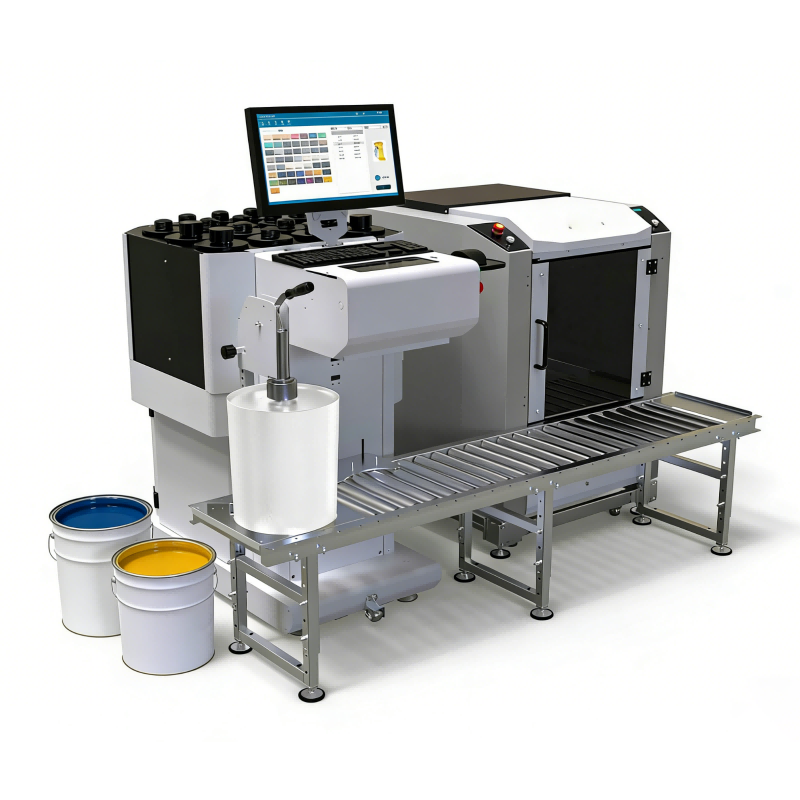
pigment for ink
Pigment for ink represents a fundamental component in modern printing and writing solutions, serving as the essential colorant that delivers vibrant, durable, and consistent color reproduction across diverse applications. These specialized pigments are finely dispersed particles that remain suspended within ink formulations, providing superior performance characteristics compared to traditional dye-based alternatives. The primary function of pigment for ink lies in its ability to create stable, fade-resistant colors that maintain their integrity under various environmental conditions including light exposure, temperature fluctuations, and moisture. Unlike dyes that dissolve completely in liquid carriers, pigment particles maintain their structural integrity, resulting in enhanced opacity and color saturation. Technological features of advanced pigment for ink include nano-scale particle distribution, optimized surface treatments, and engineered chemical compositions that ensure excellent printhead compatibility and reduced maintenance requirements. Modern pigment formulations incorporate sophisticated dispersion technologies that prevent settling and agglomeration while maintaining optimal flow characteristics. These pigments demonstrate exceptional lightfastness ratings, often exceeding industry standards for archival quality printing. The applications of pigment for ink span across commercial printing, fine art reproduction, textile printing, packaging materials, and professional photography. Industrial applications include outdoor signage, automotive graphics, and architectural displays where long-term color stability is paramount. Office environments benefit from pigment-based inks through reduced smudging, water resistance, and professional document quality. The versatility of pigment for ink extends to specialized applications such as security printing, where unique formulations provide anti-counterfeiting properties. Manufacturing processes for pigment for ink involve precise quality control measures ensuring consistent particle size distribution, color matching accuracy, and chemical stability. Environmental considerations have led to the development of eco-friendly pigment formulations that reduce volatile organic compounds while maintaining superior performance standards.
 ×
×





 EN
EN