Professional Pigment Dispersion Manufacturer - Advanced Color Solutions & Custom Formulations

Get a Free Quote

Our representative will contact you soon.
Email
Company Name
Mobile/WhatsApp
Interest of Products
Message
0/1000

pigment dispersion manufacturer

A pigment dispersion manufacturer serves as a critical component in the modern industrial landscape, specializing in the production of high-quality colorants that transform raw pigments into stable, uniform liquid or paste formulations. These manufacturers combine advanced chemistry with precision engineering to create dispersions that deliver consistent color performance across diverse applications. The primary function involves breaking down pigment particles to nano or micro-scale dimensions while ensuring optimal stability and compatibility with various substrate materials. This complex process requires sophisticated grinding equipment, including bead mills, three-roll mills, and high-speed dispersers that mechanically reduce particle size while incorporating specialized additives. The technological framework encompasses particle size analysis, rheological testing, and color matching capabilities that guarantee precise specifications. Modern pigment dispersion manufacturer facilities integrate automated systems for batch consistency, quality control protocols that monitor viscosity, pH levels, and color strength throughout production cycles. These manufacturers develop custom formulations tailored to specific industry requirements, whether for automotive coatings requiring exceptional durability, printing inks demanding superior flow properties, or textile applications needing excellent washfastness. The manufacturing process involves multiple stages including wetting, grinding, stabilization, and filtration to achieve optimal performance characteristics. Advanced pigment dispersion manufacturer operations utilize computer-controlled systems that maintain precise temperature, pressure, and mixing parameters to ensure reproducible results. Quality assurance laboratories employ spectrophotometers, particle size analyzers, and stability testing equipment to validate product performance before shipment. The applications span numerous sectors including paints and coatings, printing inks, plastics coloration, cosmetics, and specialty chemical formulations. Each application demands specific performance criteria such as lightfastness, chemical resistance, thermal stability, or compatibility with particular resin systems, making the expertise of a skilled pigment dispersion manufacturer invaluable for achieving optimal results in end-use products.

New Products

Working with an established pigment dispersion manufacturer provides numerous practical benefits that directly impact your bottom line and product quality. Cost efficiency stands as a primary advantage because these manufacturers leverage economies of scale to produce dispersions at lower per-unit costs than in-house production would allow. You eliminate the substantial capital investment required for specialized grinding equipment, quality control instruments, and facility modifications while avoiding ongoing maintenance expenses and technical training costs. Time savings represent another significant benefit as experienced pigment dispersion manufacturer teams can develop and deliver custom formulations much faster than internal development cycles typically allow. Their existing knowledge base, established supplier relationships, and proven processes accelerate project timelines from concept to commercial production. Quality consistency becomes achievable through their standardized procedures, advanced testing capabilities, and dedicated quality control personnel who monitor every production batch. This consistency reduces waste, minimizes customer complaints, and protects your brand reputation in the marketplace. Technical expertise available from a professional pigment dispersion manufacturer includes formulation chemistry knowledge, application experience, and troubleshooting capabilities that would take years to develop internally. Their chemists understand how different pigments behave in various systems and can recommend optimal solutions for specific performance requirements. Regulatory compliance becomes simplified because established manufacturers maintain current knowledge of environmental regulations, safety standards, and international trade requirements that affect pigment dispersions. They handle documentation, testing protocols, and certification processes that ensure your products meet all applicable standards. Supply chain reliability improves through their established relationships with raw material suppliers, backup sourcing options, and inventory management systems that prevent production disruptions. Risk reduction occurs through their insurance coverage, established safety protocols, and proven track record of consistent delivery. Innovation access allows you to benefit from their ongoing research and development efforts, new technology adoption, and industry trend awareness without making your own investments in these areas. Scalability becomes manageable as they can adjust production volumes to match your business growth without requiring additional infrastructure investments on your part. Environmental compliance is enhanced through their waste management systems, emission control equipment, and sustainable practices that help you meet corporate responsibility goals while maintaining operational efficiency.

Latest News

Sunmun Subsidiary Named

12

Mar

Sunmun Subsidiary Named "Jiangsu Provincial Green Factory", Advancing Sustainable Colorant Production

View More
Sunmun’s Water-Based Color Paste for Viscose Fiber Dope Dyeing Wins “Jiangsu Premium Product” Certification 2025

16

Mar

Sunmun’s Water-Based Color Paste for Viscose Fiber Dope Dyeing Wins “Jiangsu Premium Product” Certification 2025

View More
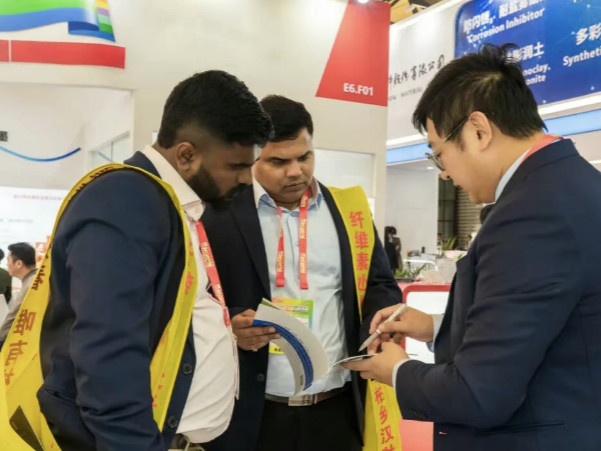
Sunmun Deepens Southeast Asia Presence with Eco-Friendly Colorants at Pacific Coatings Show 2025

16

Mar

Sunmun Deepens Southeast Asia Presence with Eco-Friendly Colorants at Pacific Coatings Show 2025

View More
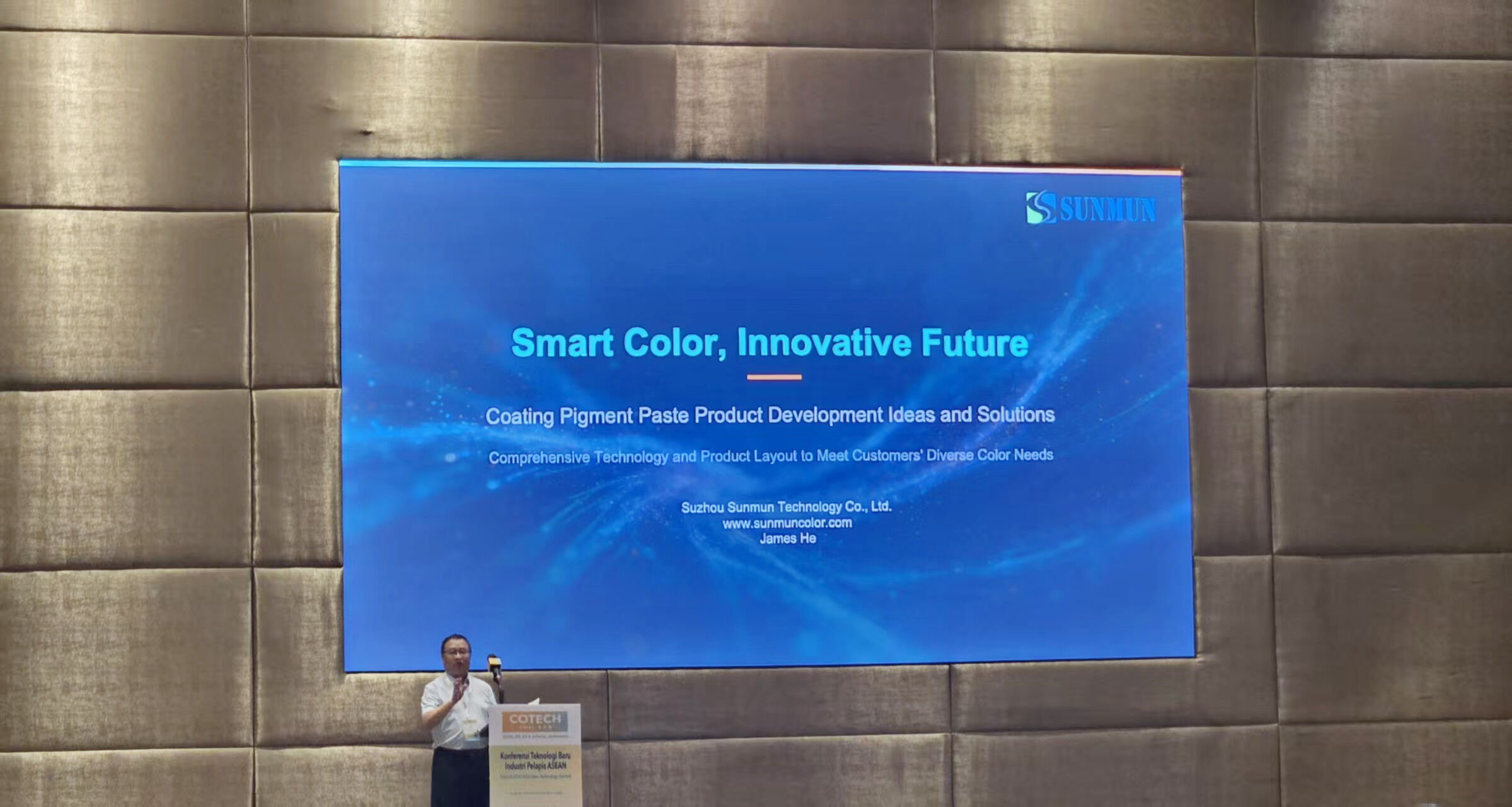
SUNMUN Technology Shines at ASEAN Advanced Coatings Technology Forum in Indonesia

28

Apr

SUNMUN Technology Shines at ASEAN Advanced Coatings Technology Forum in Indonesia

View More

Get a Free Quote

Our representative will contact you soon.
Email
Company Name
Mobile/WhatsApp
Interest of Products
Message
0/1000

pigment dispersion manufacturer

Advanced Particle Size Reduction Technology

Advanced Particle Size Reduction Technology

The cornerstone of any superior pigment dispersion manufacturer lies in their advanced particle size reduction technology, which fundamentally determines the quality and performance of the final dispersion products. Modern facilities employ state-of-the-art grinding systems including horizontal bead mills, vertical mills, and specialized high-energy dispersers that can achieve particle sizes down to nanometer ranges while maintaining strict control over particle distribution curves. This technological capability directly translates to enhanced color development, improved transparency, increased tinctorial strength, and superior gloss characteristics in end-use applications. The grinding process involves carefully controlled parameters including bead size selection, mill speed optimization, residence time management, and temperature control to prevent thermal degradation of sensitive pigments while achieving optimal dispersion quality. Leading pigment dispersion manufacturer operations integrate real-time monitoring systems that track particle size reduction progress through laser diffraction analysis, ensuring consistent results batch after batch. The technology extends beyond simple size reduction to include surface modification techniques that improve pigment wetting, stabilization chemistry that prevents reagglomeration, and specialized additives that enhance compatibility with target resin systems. This comprehensive approach to particle engineering enables manufacturers to create dispersions with tailored properties for specific applications, whether requiring maximum opacity for architectural coatings, exceptional flow properties for digital printing inks, or precise rheological behavior for industrial coatings. The investment in advanced grinding technology also enables processing of difficult-to-disperse pigments including high-performance organic colorants, effect pigments with special optical properties, and inorganic pigments with challenging surface characteristics. Quality control systems integrated with the grinding equipment provide continuous feedback on dispersion quality, allowing immediate adjustments to maintain specifications throughout production runs. This technological sophistication ensures that customers receive dispersions with optimal performance characteristics, reduced processing time in their own manufacturing operations, and enhanced final product quality that meets the most demanding market requirements while maintaining cost-effectiveness through efficient processing methods.
Comprehensive Quality Control and Testing Capabilities

Comprehensive Quality Control and Testing Capabilities

A distinguished pigment dispersion manufacturer demonstrates its commitment to excellence through comprehensive quality control and testing capabilities that ensure consistent product performance and customer satisfaction. These sophisticated testing protocols encompass multiple analytical techniques including spectrophotometric color measurement, particle size analysis using laser diffraction and dynamic light scattering methods, rheological characterization across various shear rates, stability testing under accelerated aging conditions, and compatibility assessments with different resin systems. The quality control laboratory serves as the nerve center where each batch undergoes rigorous evaluation against established specifications before release to customers. Advanced instrumentation including high-resolution spectrophotometers enables precise color matching and ensures batch-to-batch consistency that meets the strictest tolerance requirements. Particle size analyzers provide detailed information about distribution curves, allowing optimization of grinding parameters and verification of dispersion quality. Rheological testing equipment measures viscosity profiles, thixotropic behavior, and flow characteristics that directly impact application properties and end-use performance. Stability testing protocols simulate real-world storage conditions through controlled temperature cycling, UV exposure, and chemical compatibility assessments that predict long-term performance. The testing capabilities extend to application-specific evaluations including drawdown testing for color development, adhesion testing for coating applications, lightfastness evaluation for exterior durability, and migration testing for food-contact applications. These comprehensive testing procedures ensure that every dispersion meets not only internal quality standards but also customer specifications and regulatory requirements. Documentation systems maintain complete traceability from raw material receipt through final product shipment, providing customers with detailed certificates of analysis and supporting data for their own quality systems. The quality control process also includes statistical process control methods that identify trends and potential issues before they impact product quality, enabling proactive adjustments to maintain consistency. Environmental testing capabilities assess the impact of temperature variations, humidity changes, and chemical exposure on dispersion performance, ensuring reliable performance across diverse application conditions and geographic markets where customers operate their businesses.
Custom Formulation Development and Technical Support

Custom Formulation Development and Technical Support

The ability to provide custom formulation development and comprehensive technical support distinguishes an exceptional pigment dispersion manufacturer from commodity suppliers, offering customers tailored solutions that address specific application requirements and performance challenges. This specialized service begins with detailed consultation to understand customer needs, application parameters, performance criteria, and processing constraints that influence formulation design. Experienced chemists and application specialists work collaboratively with customers to develop dispersions that optimize color performance, processing characteristics, and end-use properties while considering cost targets and regulatory requirements. The formulation development process incorporates extensive knowledge of pigment chemistry, resin compatibility, additive interactions, and application-specific requirements to create dispersions that deliver superior performance in target applications. Laboratory capabilities include small-scale trial production, accelerated testing protocols, and application simulation that validates formulation performance before full-scale production commitments. Technical support extends beyond initial formulation development to include ongoing assistance with processing optimization, troubleshooting application issues, and adaptation to changing requirements or raw material availability. The support team maintains expertise across diverse industries including automotive, architectural, industrial, printing, and specialty applications, enabling them to provide relevant guidance for specific market segments. Documentation support includes technical data sheets, safety information, regulatory compliance data, and application guidelines that facilitate customer product development and regulatory approval processes. Training programs help customer personnel understand proper handling procedures, storage requirements, and application techniques that maximize dispersion performance and minimize processing issues. The custom formulation capability also encompasses specialty requirements such as low-VOC formulations, heavy-metal-free compositions, food-grade dispersions, and environmentally sustainable options that meet evolving market demands and regulatory standards. Rapid prototyping services allow quick evaluation of new concepts, enabling faster time-to-market for customer innovations while reducing development costs and risks. The technical support infrastructure includes application laboratories where customers can conduct trials, evaluate performance, and optimize their own formulations using the manufacturer's dispersions. This comprehensive approach to custom development and technical support creates long-term partnerships that drive innovation, improve product performance, and enhance competitive positioning in the marketplace through collaborative problem-solving and continuous improvement initiatives.

Get a Free Quote

Our representative will contact you soon.
Email
Company Name
Mobile/WhatsApp
Interest of Products
Message
0/1000