Premium Inorganic Pigment Solutions - Superior Color Performance and Durability

Get a Free Quote

Our representative will contact you soon.
Email
Company Name
Mobile/WhatsApp
Interest of Products
Message
0/1000

inorganic pigment

Inorganic pigment represents a cornerstone technology in modern coloration applications, delivering exceptional performance across diverse industrial sectors. These synthetic or naturally occurring mineral-based colorants provide superior stability, durability, and color consistency compared to their organic counterparts. The main functions of inorganic pigment include providing vibrant, long-lasting color to coatings, plastics, ceramics, construction materials, and textiles while maintaining structural integrity under extreme environmental conditions. The technological features of inorganic pigment encompass outstanding heat resistance, chemical inertness, and UV stability, making them indispensable for applications requiring long-term performance. These pigments demonstrate excellent opacity and covering power, ensuring efficient material usage and cost-effective formulations. Their crystal structure provides inherent stability, resisting degradation from moisture, acids, alkalis, and oxidative environments. The particle size distribution of inorganic pigment can be precisely controlled during manufacturing, allowing customization for specific application requirements. Applications span across architectural coatings where weather resistance is paramount, automotive finishes requiring durability and color retention, industrial coatings for protective purposes, and plastic colorization for consumer goods. In ceramics and glass manufacturing, inorganic pigment enables high-temperature processing without color degradation. The construction industry relies heavily on these pigments for concrete coloring, roofing materials, and decorative elements that must withstand decades of exposure. Additionally, inorganic pigment finds extensive use in printing inks, particularly for outdoor advertising and packaging materials requiring fade resistance. The versatility of these pigments extends to specialized applications including solar reflective coatings, anti-corrosive primers, and fire-resistant materials. Their non-toxic nature makes them suitable for applications involving food contact surfaces and children's products, adhering to stringent safety regulations worldwide.

Popular Products

The advantages of inorganic pigment make them the preferred choice for demanding applications where performance and reliability are critical factors. These pigments offer exceptional longevity, maintaining their color integrity for decades without significant fading or deterioration. This extended lifespan translates to reduced maintenance costs and fewer reapplication cycles, providing substantial economic benefits to end users. The superior lightfastness of inorganic pigment ensures consistent color appearance even under intense UV exposure, making them ideal for exterior applications and products requiring long-term aesthetic appeal. Their excellent heat stability allows processing at high temperatures without color degradation, enabling use in applications such as powder coatings, ceramics, and high-temperature plastics. Chemical resistance is another significant advantage, as inorganic pigment remains stable when exposed to acids, bases, solvents, and other aggressive chemicals commonly encountered in industrial environments. This chemical inertness prevents color bleeding, migration, or reaction with surrounding materials, ensuring product integrity throughout the service life. The opacity and hiding power of inorganic pigment reduce the quantity needed to achieve desired color strength, resulting in cost-effective formulations and improved production efficiency. Their compatibility with various binder systems allows formulators flexibility in product development while maintaining consistent performance characteristics. Environmental sustainability is enhanced through the use of inorganic pigment, as they do not release volatile organic compounds during application or service life. Their non-biodegradable nature, while sometimes viewed as a concern, actually contributes to product durability and reduces the need for frequent replacements. The wide color gamut available in inorganic pigment formulations enables precise color matching and custom shade development for specialized applications. Manufacturing consistency ensures batch-to-batch color uniformity, critical for large-scale production and quality control. Additionally, inorganic pigment demonstrates excellent dispersion characteristics, facilitating easy incorporation into various medium systems without special processing requirements. Their non-migratory properties make them suitable for applications requiring color stability over extended periods.

Latest News

Sunmun Subsidiary Named

12

Mar

Sunmun Subsidiary Named "Jiangsu Provincial Green Factory", Advancing Sustainable Colorant Production

View More
Sunmun’s Water-Based Color Paste for Viscose Fiber Dope Dyeing Wins “Jiangsu Premium Product” Certification 2025

16

Mar

Sunmun’s Water-Based Color Paste for Viscose Fiber Dope Dyeing Wins “Jiangsu Premium Product” Certification 2025

View More
Sunmun Deepens Southeast Asia Presence with Eco-Friendly Colorants at Pacific Coatings Show 2025

16

Mar

Sunmun Deepens Southeast Asia Presence with Eco-Friendly Colorants at Pacific Coatings Show 2025

View More
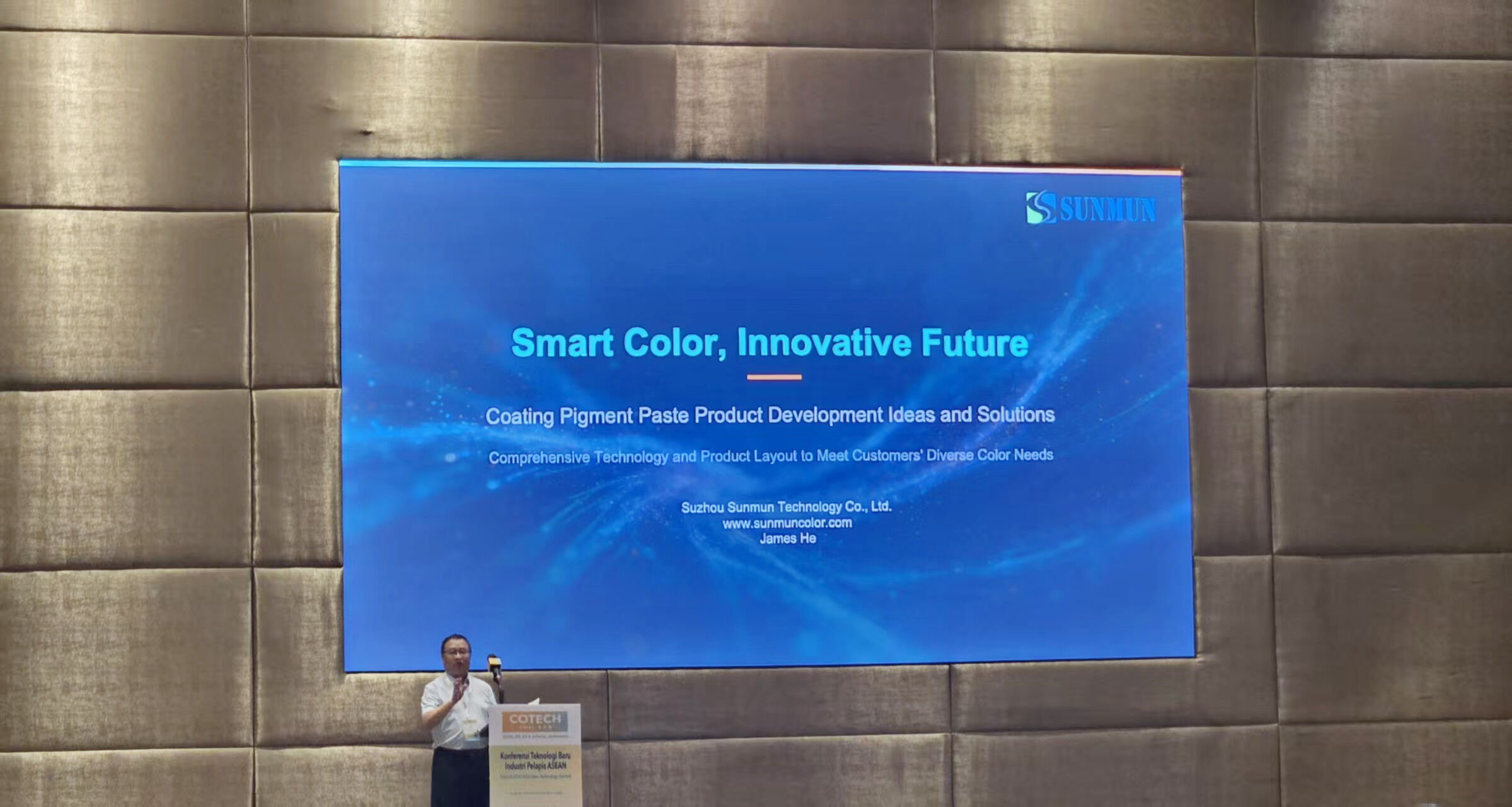
SUNMUN Technology Shines at ASEAN Advanced Coatings Technology Forum in Indonesia

28

Apr

SUNMUN Technology Shines at ASEAN Advanced Coatings Technology Forum in Indonesia

View More

Get a Free Quote

Our representative will contact you soon.
Email
Company Name
Mobile/WhatsApp
Interest of Products
Message
0/1000

inorganic pigment

Unmatched Durability and Weather Resistance

Unmatched Durability and Weather Resistance

The exceptional durability and weather resistance of inorganic pigment sets them apart as the premier choice for applications demanding long-term performance under harsh environmental conditions. This remarkable resilience stems from their inherent crystal structure and chemical composition, which provides outstanding resistance to UV radiation, temperature fluctuations, moisture, and atmospheric pollutants. Unlike organic colorants that can degrade rapidly when exposed to sunlight, inorganic pigment maintains color integrity for decades, even in extreme outdoor environments. This superior lightfastness is particularly valuable for architectural coatings, automotive finishes, and outdoor signage where color retention directly impacts aesthetic appeal and brand recognition. The weather resistance of inorganic pigment extends beyond mere color stability to include dimensional stability and resistance to chalking, cracking, and other forms of degradation that can compromise protective coatings. In marine environments, where salt spray and constant moisture pose significant challenges, inorganic pigment continues to perform reliably, protecting underlying substrates while maintaining visual appeal. The freeze-thaw resistance of these pigments makes them ideal for applications in regions experiencing extreme temperature variations, where repeated expansion and contraction cycles would cause inferior colorants to fail. Industrial applications benefit tremendously from this durability, as equipment and structures colored with inorganic pigment require less frequent maintenance and repainting, resulting in reduced downtime and operational costs. The chemical stability of inorganic pigment also contributes to their weather resistance, as they do not react with atmospheric gases, acid rain, or other environmental contaminants that can cause color shifts or degradation in less stable colorants. This comprehensive durability profile makes inorganic pigment an investment in long-term performance, providing consistent appearance and protection throughout their extended service life while reducing total cost of ownership for end users.
Superior Heat Stability for High-Temperature Applications

Superior Heat Stability for High-Temperature Applications

The superior heat stability of inorganic pigment represents a critical advantage for applications requiring exposure to elevated temperatures during processing or service life. This thermal resistance capability enables their use in high-temperature coatings, ceramics, glass manufacturing, and thermoplastic processing where organic pigments would decompose or undergo undesirable color changes. The crystalline structure of inorganic pigment provides inherent thermal stability, maintaining color integrity at temperatures exceeding 1000°C in many cases, far surpassing the thermal limits of organic alternatives. This heat stability is particularly valuable in powder coating applications, where curing temperatures of 180-220°C are standard, and any color degradation would result in unacceptable product quality. In ceramic and glass industries, inorganic pigment enables the production of colored products through high-temperature firing processes without color loss or unwanted chemical reactions. The automotive industry relies on the heat stability of inorganic pigment for engine components, exhaust systems, and under-hood applications where temperatures can reach several hundred degrees Celsius. Industrial equipment operating in high-temperature environments, such as furnaces, boilers, and heat exchangers, requires coatings colored with inorganic pigment to maintain both protective and aesthetic properties. The heat stability also extends to processing advantages, as manufacturers can utilize higher processing temperatures to improve dispersion, reduce cycle times, and enhance product quality without concern for pigment degradation. In plastic applications, particularly engineering thermoplastics processed at elevated temperatures, inorganic pigment ensures consistent color throughout the molding process and eliminates the risk of thermal degradation that could affect both appearance and performance. The dimensional stability of inorganic pigment at high temperatures prevents particle agglomeration, settling, or other physical changes that could compromise coating uniformity or performance. This thermal resilience translates to expanded application possibilities and improved processing flexibility for manufacturers seeking reliable coloration solutions for demanding high-temperature environments.
Exceptional Chemical Resistance and Compatibility

Exceptional Chemical Resistance and Compatibility

The exceptional chemical resistance and broad compatibility of inorganic pigment make them indispensable for applications in aggressive chemical environments and diverse formulation systems. This chemical inertness stems from their stable molecular structure, which resists attack from acids, alkalis, solvents, and oxidizing agents commonly encountered in industrial processes and service environments. Unlike organic pigments that may undergo chemical reactions leading to color changes, bleeding, or migration, inorganic pigment maintains its integrity and performance characteristics even when exposed to harsh chemicals. This resistance is particularly crucial in chemical processing facilities, laboratories, and industrial plants where equipment and structures must withstand contact with corrosive substances while maintaining their protective and aesthetic functions. The broad compatibility of inorganic pigment with various binder systems, including solvent-based, water-based, and powder coating formulations, provides formulators with exceptional flexibility in product development. This versatility enables the creation of specialized coatings for specific applications without compromising performance or requiring extensive reformulation. In marine coatings, where resistance to saltwater and marine growth is essential, inorganic pigment provides the chemical stability needed for long-term protection and appearance retention. The pharmaceutical and food industries benefit from the chemical inertness of inorganic pigment, as they do not leach harmful substances or react with product contents, ensuring safety and regulatory compliance. Industrial maintenance coatings rely on the chemical resistance of inorganic pigment to protect infrastructure from chemical spills, process emissions, and environmental contaminants that would quickly degrade less resistant colorants. The non-migratory properties of inorganic pigment prevent color bleeding into adjacent materials or substrates, maintaining clear color boundaries and preventing contamination in multi-component systems. This chemical stability also extends to preventing catalytic effects that could accelerate degradation of surrounding materials, ensuring overall system integrity and longevity. The compatibility with various additives, fillers, and functional ingredients allows formulators to create complex systems without concern for adverse interactions that could compromise performance or appearance.

Get a Free Quote

Our representative will contact you soon.
Email
Company Name
Mobile/WhatsApp
Interest of Products
Message
0/1000